
Last updated October 16, 2026
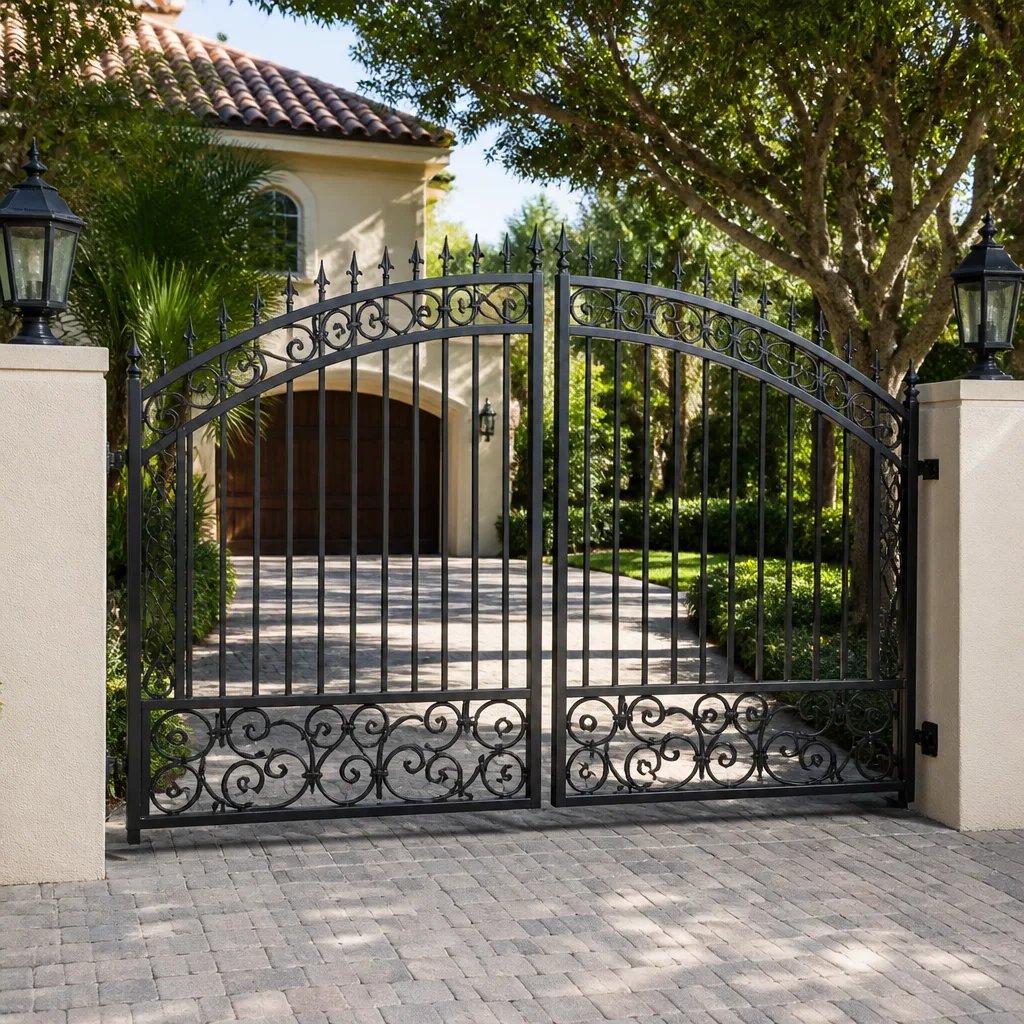 Wrought iron
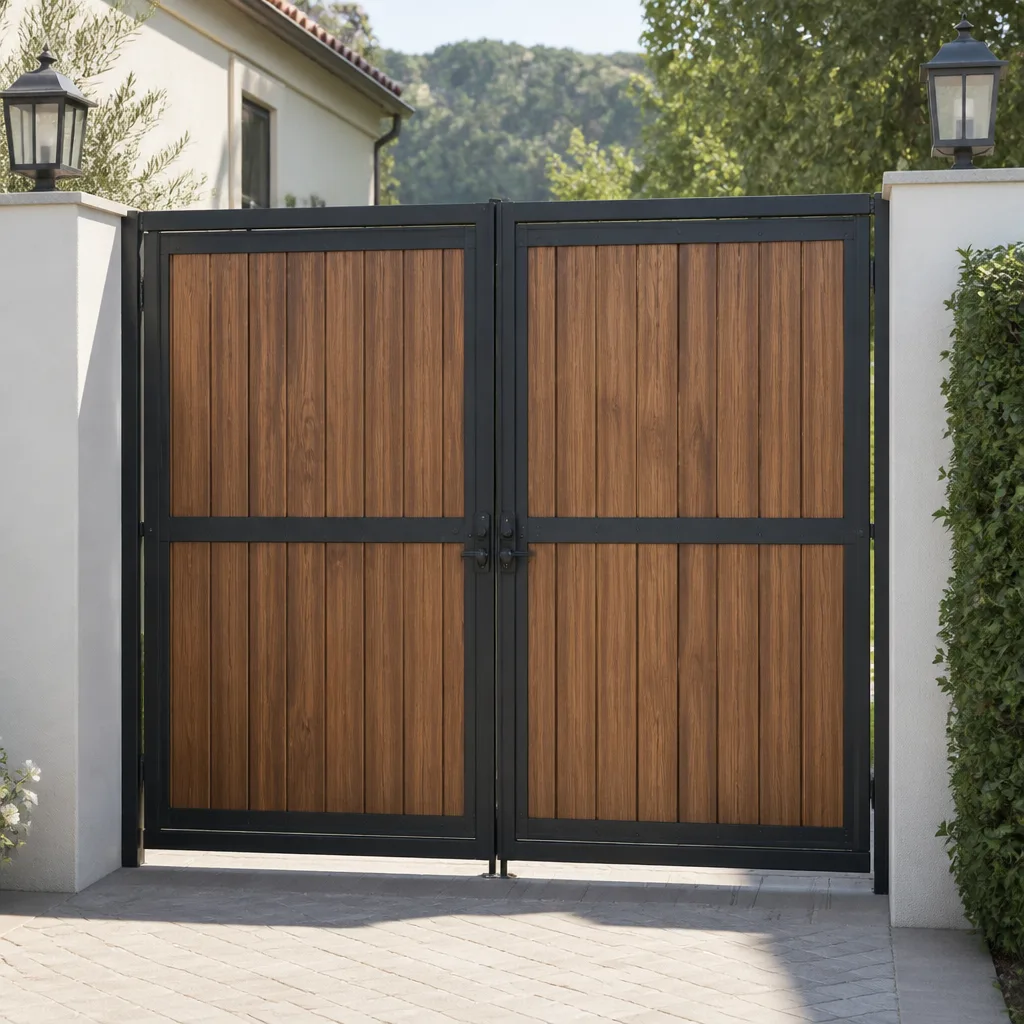 Wood & steel frame
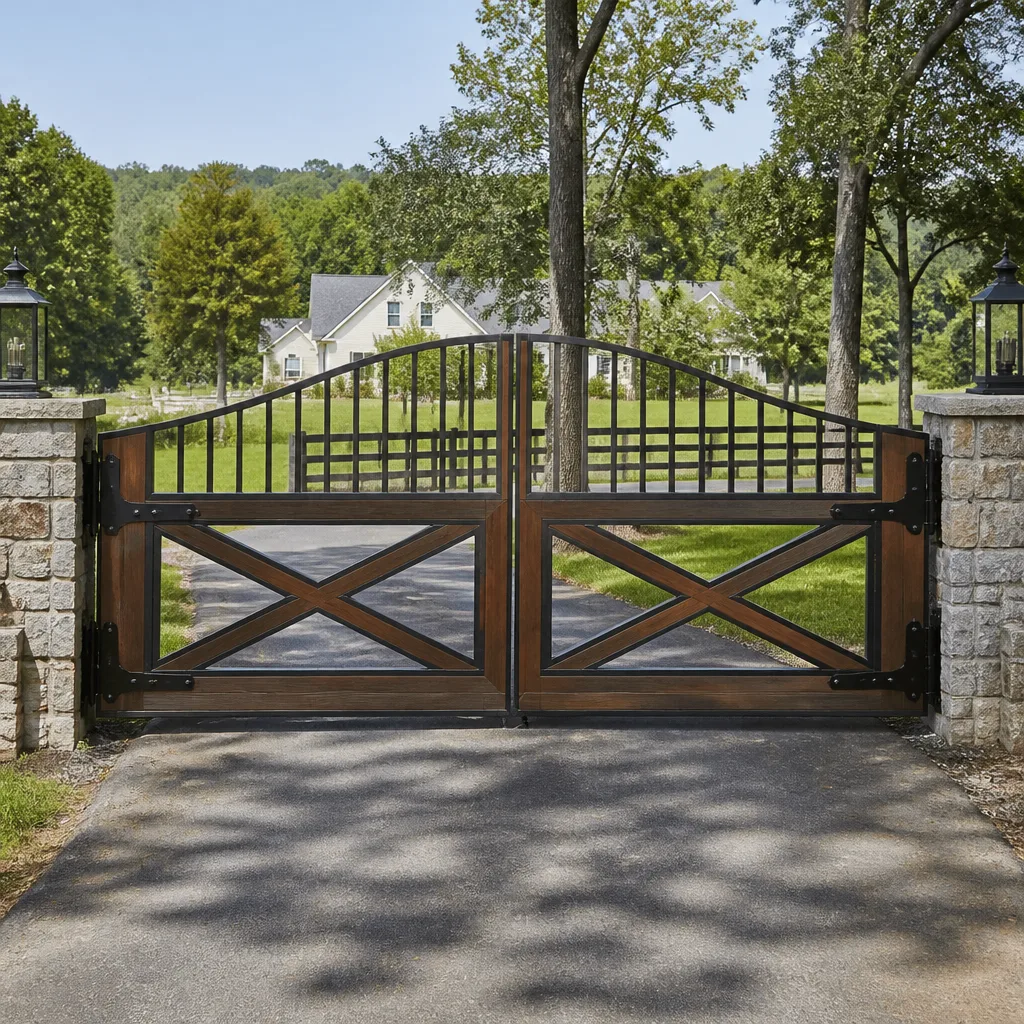 Farm & ranch
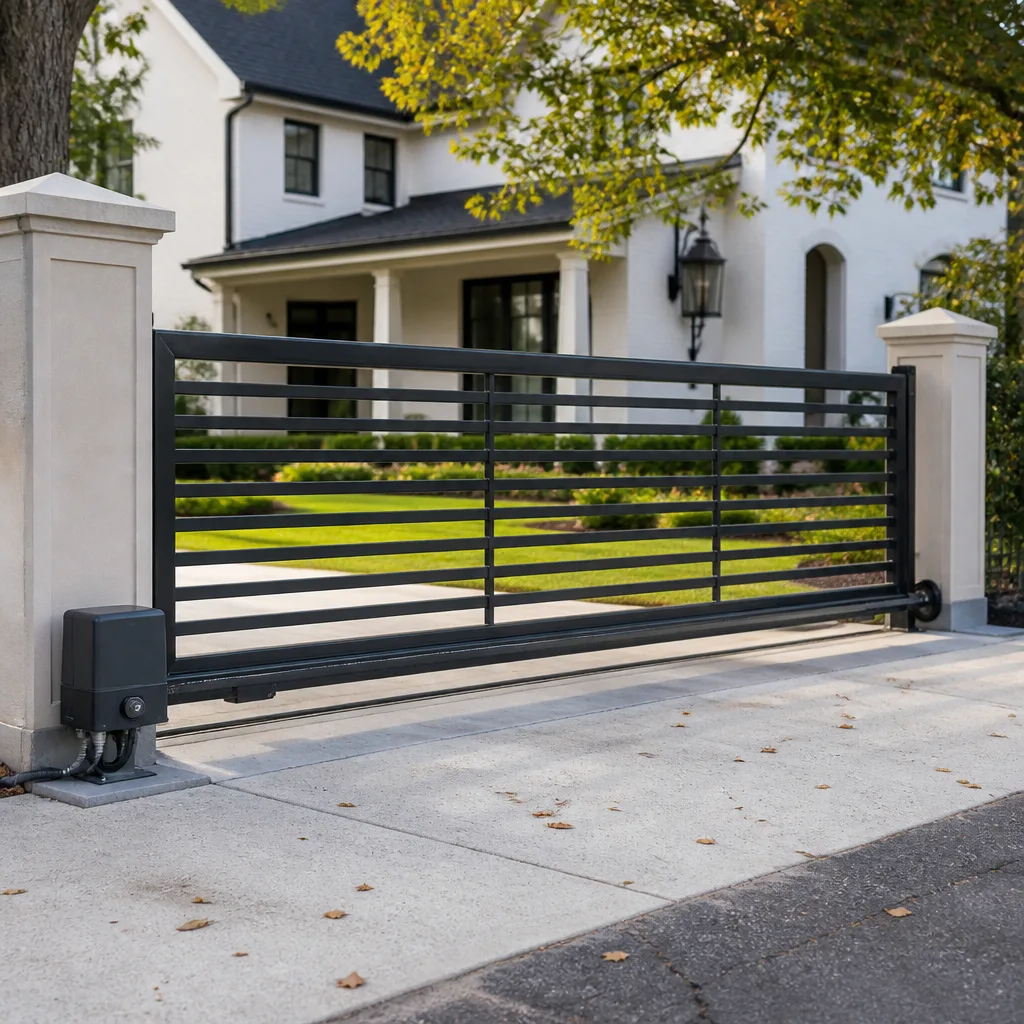 Sliding driveway gates
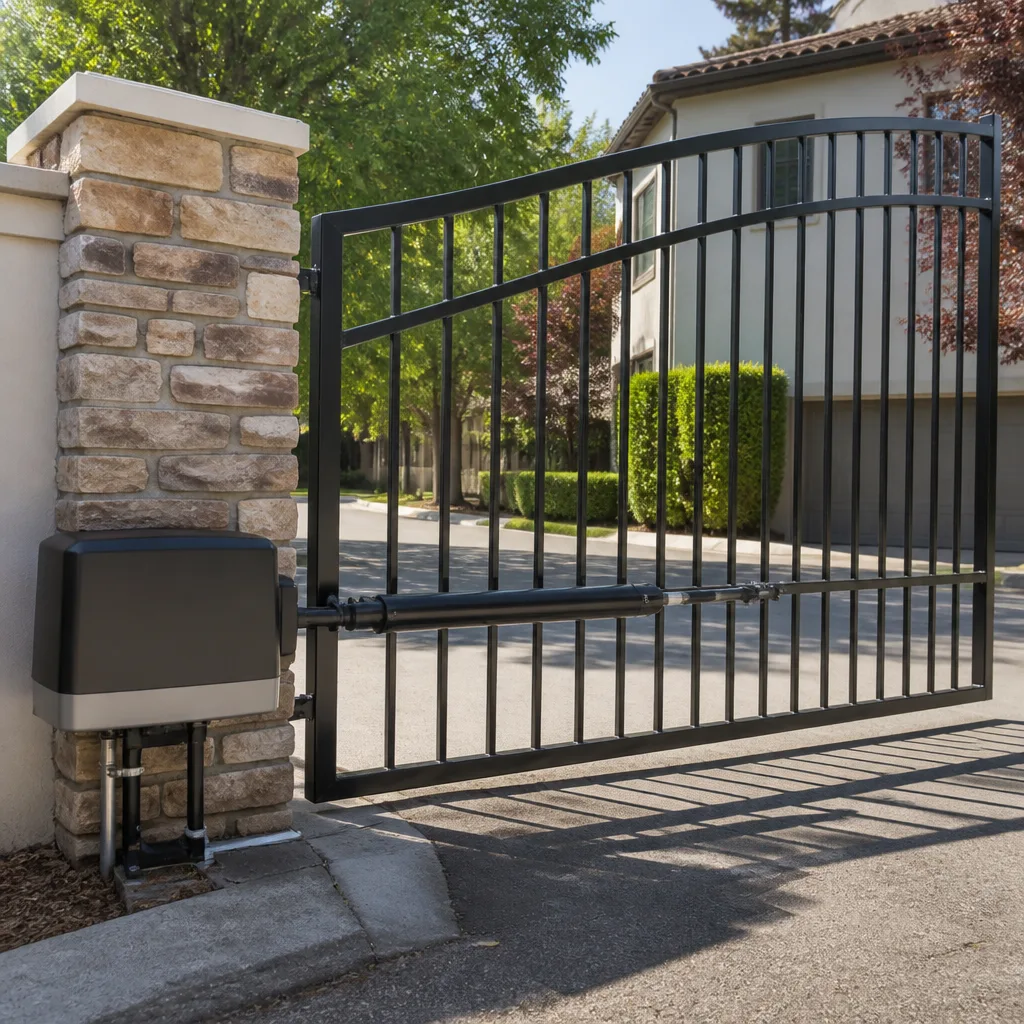 LiftMaster operators
Free on-site gate assessment - hinges, posts, and your LiftMaster or Nice gate operator checked before anything is quoted
The assessment is free and the quote is the invoice.
Get your free estimateGate Repair Permits, Codes & Inspections in CA: What You Need to Know
A homeowner in California who sells a property with an unpermitted gate motor installation can be required to tear it out and reinstall it at their own expense after escrow closes. That outcome starts with a contractor who said permits weren’t necessary. In West Covina, where hillside properties put real weight on gate footings and where older homes pass through escrow every month, a permit question on a disclosure form is not a formality. This guide walks through which gate repairs in California actually require a permit, which ones don’t, what West Covina’s Community Development Department charges and checks, how UL 325 factors into motor work, and what unpermitted work costs you later. For related reading, see our Gate Repair Warning Signs: A West Covina Homeowner’s Reference Guide.
Quick Answer
Most gate repairs in California, including component swaps, hinge replacement, and operator adjustments, do not require a permit. New gate motor installations, structural post replacement, and any work that alters an access control system on a multi-family or commercial property typically do. In West Covina, permits run through the Community Development Department, and an unpermitted gate motor can resurface during a title search and derail a sale.
Styles & brands we work with
Table of Contents
- Which Gate Repairs in California Require a Permit
- Which Gate Repairs Do Not Require a Permit
- The West Covina Permit Process: Fees, Timeline, and Inspections
- UL 325 Compliance and Why It Reaches Residential Gates
- How Unpermitted Gate Work Appears in Title Searches
- Homeowner vs. Contractor: Who Pulls the Permit, and Why It Matters
- Insurance and Injury Liability on Unpermitted Gates
Which Gate Repairs in California Require a Permit
California does not have a single statewide gate permit requirement. Authority sits with each city and county, and most follow the same structural logic borrowed from the California Building Code’s sections on fences, walls, and electrical work. The distinction comes down to what you are changing. If the repair alters the structure, the electrical supply, or the automated safety system, a permit is generally required. If it restores a component to its original function, it is not.
The specific gate projects that commonly require a permit in California include:
- Installing a new gate motor or operator where none existed before. This involves new electrical wiring, which triggers the electrical permit requirement in most jurisdictions, including West Covina.
- Replacing gate posts that are embedded in concrete footings. Digging out an old post and setting a new one changes the structural anchor point. Inspectors want to see footing depth, concrete mix, and post alignment before the concrete cures.
- Converting a manual gate to an automated one. The automation adds a motor, safety sensors, and electrical supply. All three draw inspection review.
- Adding an access control system to a multi-family or commercial gate. Keypads, card readers, and loop detectors on shared driveways bring the project under building and electrical code review, plus fire access requirements.
- Any gate work on a property line that changes the structure’s height or footprint. If you extend a gate or shift its opening, local setback and height rules apply.
In West Covina specifically, the trigger is usually the electrical component. A new operator from LiftMaster or FAAC draws an electrical permit because the wiring between the panel and the operator is new work. Carver Gate Repair West Covina has seen homeowners discover this at the worst possible moment: during escrow, when a buyer’s inspector asks for the permit record on a motor that was installed two owners ago. No permit means a disclosure problem, and disclosure problems mean price renegotiations.
Which Gate Repairs Do Not Require a Permit
Most of the gate repair calls our technicians in West Covina run do not involve a permit at all. The state and local codes carve out routine maintenance and component replacement explicitly, because the original structure and electrical run remain unchanged.
Repairs that are typically exempt from permit requirements include:
- Replacing a failed gate motor with a like-for-like unit. If the operator’s power wiring already exists and you are swapping one operator for another in the same location, most jurisdictions treat this as a repair. No new electrical run means no new permit.
- Replacing hinges, wheels, rollers, or track hardware. These components wear out. Swapping them does not change the gate’s structure or electrical system.
- Adjusting limit switches. A limit switch tells the motor where to stop. Adjusting it is a mechanical tweak, not a structural change.
- Replacing a loop detector or safety photo eye. These are low-voltage components tied to the existing operator. Repairing or replacing them falls under routine maintenance.
- Repairing a bent gate leaf or welding a cracked weld on an existing gate. As long as the gate’s footprint and post structure remain intact, this is a repair.
- Replacing a remote control receiver or keypad that uses existing wiring. Same location, same function, no new electrical run.
Here is the practical rule: if the repair restores what was already there, you almost never need a permit. If the repair creates something new, a new motor, new structural posts, new electrical, new access control, you should check. When we quote gate motor repair in West Covina, we flag the permit question in the written estimate so there are no surprises later. The written price we give covers the scope we can see. If a permit is required, it is line-itemed before work starts.
The West Covina Permit Process: Fees, Timeline, and Inspections
West Covina processes gate and electrical permits through the Community Development Department, located at City Hall on West Puente Street. The process is straightforward for a homeowner doing a simple motor swap, but it involves several steps worth knowing before you schedule the work.
Here is the step-by-step sequence for a typical permitted gate motor installation in West Covina:
- Submit a permit application with a site plan. The plan shows where the gate sits on the property, which side the operator mounts on, and the electrical path to the panel. For simple residential work, a hand-drawn plan with measurements is usually accepted.
- Pay the plan check and permit fees. West Covina’s electrical permit fees for a single gate operator typically run between $150 and $400, depending on the scope. If structural post work is included, the building permit fee adds another $200 to $600. These are the rates we quote from current projects. The city updates its fee schedule periodically, so confirm the exact number when you apply.
- Schedule the rough inspection. For post replacement, the inspector comes before concrete is poured to confirm footing depth and rebar placement. For electrical work, the inspector verifies conduit, wire gauge, and grounding before the trench is covered.
- Complete the installation. The operator goes in, safety sensors get wired, the UL 325-compliant entrapment protections get tested.
- Schedule the final inspection. The inspector verifies the operator functions correctly, the safety edges or photo eyes reverse the gate on contact, and the install matches the submitted plan.
Plan for the entire process to take two to three weeks from application to final sign-off in West Covina, assuming no corrections. Corrections add a re-inspection fee and a week. Most delays we see come not from the city but from incomplete plans. A site plan that omits the electrical path or the gate’s swing direction gets bounced back, and the clock restarts.
For gate installation in West Covina, the permit is part of the job scope we write into the quote. The price you agree to before work starts includes the permit fee, the plan, and the inspection coordination. You are not chasing city paperwork on your own.
UL 325 Compliance and Why It Reaches Residential Gates
UL 325 is the safety standard that governs automatic gate operators in the United States. It sets the requirements for entrapment protection, which means the gate must stop and reverse if something or someone is in its path. The standard was written for all automatic gates, but enforcement historically focused on commercial and multi-family properties. That is changing.
Here is what UL 325 requires on a compliant automatic gate:
- Two independent entrapment protection mechanisms. Typically a photo eye that detects an obstruction and a reversing mechanism (such as a safety edge or inherent motor current sensing) that stops and reverses the gate on contact.
- Warning signage on both sides of the gate for vehicular gates, alerting pedestrians and vehicles to the automatic operation.
- Proper positioning of controls. The manual release and the control station must be placed where a user cannot reach through the gate to operate them, preventing a person from being pinned while trying to open the gate.
- Constant-pressure-to-close protection in certain applications where other entrapment protections cannot be installed.
For a West Covina homeowner, UL 325 matters in two situations. First, if your property is on a shared driveway or is zoned as a duplex or multi-family, the enforcement bar is higher. An inspector checking a new motor install on a multi-family property will verify entrapment protection directly. Second, if your gate motor is old enough that it predates current UL 325 requirements, a replacement operator must meet the current standard. When we replace a Viking or BFT operator on an older gate, we install the current photo eye and safety edge configuration as part of the job. It is not an upsell. It is the standard a new door operator must meet to pass inspection and to keep the liability on the manufacturer’s UL listing, not on you.
The safety concern here is real. An automatic gate without functioning entrapment protection can pin a child, a delivery driver, or a pet. A gate under power is a piece of machinery, and the code treats it that way. If you are troubleshooting an older operator and the reverse function is not working, do not bypass the safety sensor to get it running. Call a technician who can test and repair the entrapment protection as part of the repair. That is the kind of repair where the right call is a professional, not a weekend adjustment.
How Unpermitted Gate Work Appears in Title Searches
The moment an unpermitted gate motor becomes a problem is almost never the moment it is installed. The problem arrives when the property changes hands. Title companies and buyer’s inspectors pull permit records from the city. If the city has no record of the electrical work that is plainly visible on the property, it becomes a disclosure item.
Here is what happens in West Covina when a seller has unpermitted gate motor work:
- The buyer’s home inspector flags the gate motor. The inspector sees an automated gate with electrical supply and checks the permit record. No record means a note in the inspection report.
- The buyer’s agent requests a retrofit permit or removal. The buyer does not want to inherit the liability. The standard response is a request for the seller to either pull a retrofit permit, which may require bringing the install up to current code, or remove the operator entirely.
- The seller pays for it at closing. Either the price drops or the seller funds an escrow credit to cover the retrofit. In a market like West Covina where buyers negotiate hard, this credit runs from $1,500 to $4,500 depending on what the retrofit requires.
- Worst case: the buyer walks. If the gate is on a shared driveway or has safety sensors that cannot be brought into compliance without structural changes, the buyer can cancel.
The remediation cost after the fact is almost always higher than the permit would have cost up front. A $300 electrical permit avoided is often a $2,000 to $5,000 retrofit later. We have helped West Covina homeowners untangle exactly this after a sale went sideways. The work takes longer, costs more, and includes an inspection curve that did not exist when the original install happened.
Homeowner vs. Contractor: Who Pulls the Permit, and Why It Matters
In California, the property owner is ultimately responsible for permits on their property, but the contractor’s role in pulling the permit is a signal of how the contractor operates. For help choosing wisely, read our How to Hire a Gate Repair Contractor in West Covina: A Step-by-Step Guide. A contractor who tells you to pull your own permit is transferring risk to you. The reason is simple: the permit holder is the party named on the permit application, and if the install fails inspection or the city later identifies a code issue, the named party is who the city contacts.
Here is how the two scenarios play out:
- Contractor pulls the permit. The contractor’s name and license number are on the application. The contractor is responsible for scheduling inspections, correcting deficiencies, and getting final sign-off. If the work fails, the contractor fixes it. This is how reputable gate companies in West Covina operate. It is how we operate. Every permitted job we run has the permit in our name, not yours.
- Homeowner pulls the permit. The homeowner is responsible for the inspection schedule and any corrections. If the contractor does substandard work and walks, the city’s open permit stays tied to the property. When you sell, an open permit is a bigger problem than no permit at all. The city sees it, the inspector never signed off, and the buyer demands it be closed before closing.
A contractor who says “you pull the permit, I’ll just do the work” is often trying to avoid the paper trail. The reason to avoid the paper trail is usually that the work would not pass. We have seen this in West Covina more times than we should: a homeowner pulls a permit, the contractor does the work, the gate fails inspection on UL 325 entrapment protection, and the contractor stops answering the phone. The homeowner now owns an open permit and a gate that cannot legally stay in service.
The Garrison Standard that Carver Gate Repair West Covina runs on is built around this exact failure mode. Every job gets a written price before work starts. Every repair gets a written guarantee, good for a full year. If the repair fails inside that year, we come back free. And when a permit is required, it is in our name, in the written quote, and closed out before we hand you the invoice. That is not a premium service. It is the minimum a homeowner should accept from any gate contractor.
Insurance and Injury Liability on Unpermitted Gates
An unpermitted gate motor creates a liability question that most homeowners do not think about until an injury happens. Homeowner’s insurance policies generally cover injuries that occur on the property, but insurers can deny a claim if the injury is tied to unpermitted work. The insurer’s argument is straightforward: if the city never inspected the installation, the homeowner accepted a risk the insurer did not agree to cover.
The specific scenarios where this matters:
- A delivery driver is injured when a gate closes on them. The driver’s attorney requests the permit record for the gate operator. No permit, no inspection. The insurer reviews the file, finds the coverage gap, and the homeowner’s personal assets become the target.
- A neighbor’s child climbs the gate and is hurt by a moving operator. Same chain. The gate’s automatic function was installed without inspection. The entrapment protection was never verified by the city.
- A fire occurs on the property tied to the gate’s electrical supply. The fire marshal’s report notes the unpermitted electrical work. The insurer denies the structure claim.
In West Covina, where many homes have long driveway gates on hillside lots, the gate is the first thing a visitor encounters. It is not an accessory. It is a piece of powered equipment that runs dozens of times a day. If it was never inspected, every one of those cycles is a liability exposure the homeowner carries silently for years.
What does a permit actually buy you? An inspection. An independent set of eyes from the city verifying the wiring is correct, the footings are deep enough, the entrapment protection works, and the install matches the plan. That is the difference between a gate that is safe and a gate that is only assumed to be safe. We think the distinction matters, and the $200 to $500 a West Covina permit costs is a small price for the inspection record alone.
Common Mistakes to Avoid
- Believing a contractor who says “you don’t need a permit” without checking the city. The city of West Covina decides what requires a permit, not the contractor. A two-minute call to the Community Development Department settles the question permanently.
- Pulling the permit yourself to save money while the contractor does the work. This puts the inspection liability in your name while the contractor controls the quality of the install. If it fails, you own the open permit.
- Replacing an old gate motor with a new one and skipping the UL 325 entrapment protection. The new motor must meet the current standard. A motor swap that ignores the photo eye and safety edge will fail inspection if the property ever gets one.
- Assuming gate repairs are always permit-exempt. Component swaps are. New motor installs, structural post replacement, and electrical runs are not. The word “repair” is not a blanket exemption.
- Not keeping the permit record after the job is done. The buyer at your eventual sale will ask for it. The city’s online records should show a closed permit with final sign-off. Confirm it is closed before you file the paperwork.
- Ignoring an open permit on a property you are buying. An open permit transfers with the property. Close it before closing, or negotiate a credit to close it after.
- Hiring a gate contractor who will not pull the permit in their own name. A contractor who quotes the job but leaves the permit to you has told you everything you need to know about how they will handle the inspection.
See the difference
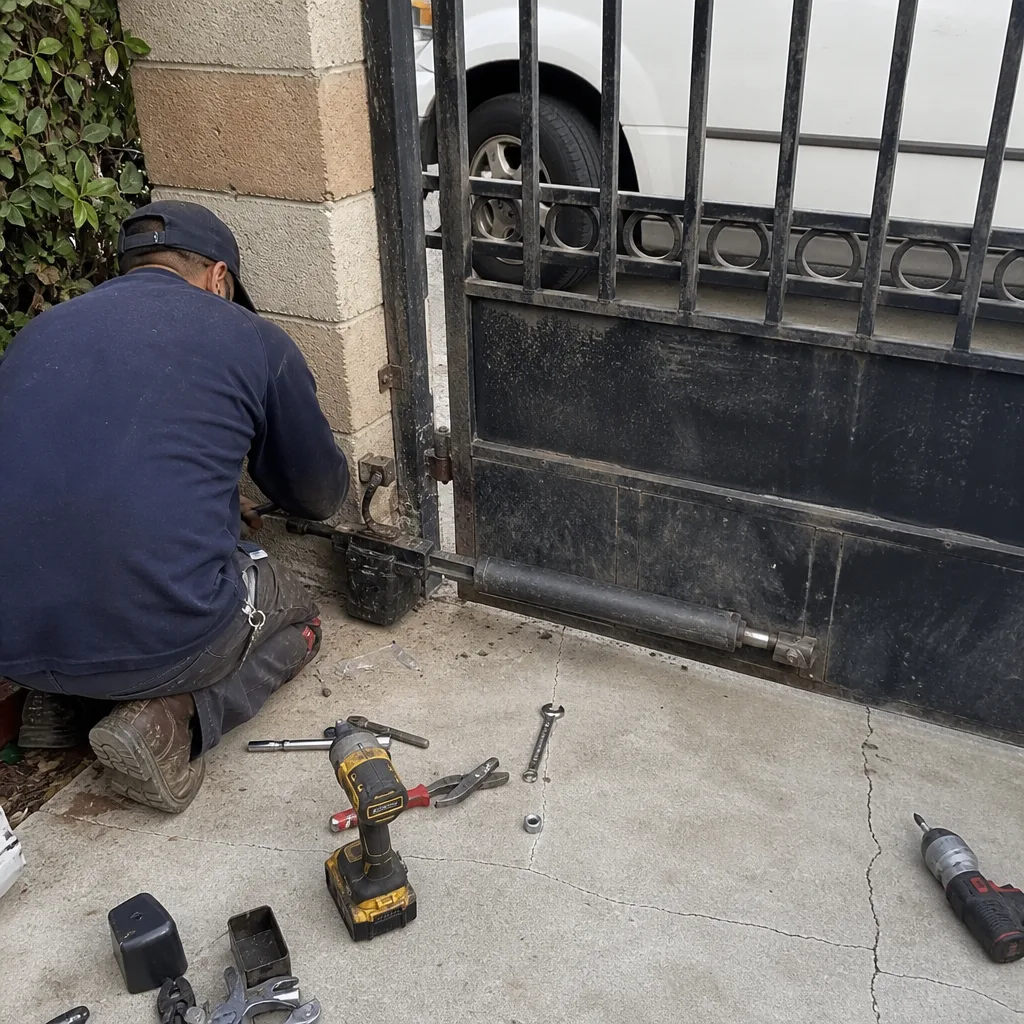 Before
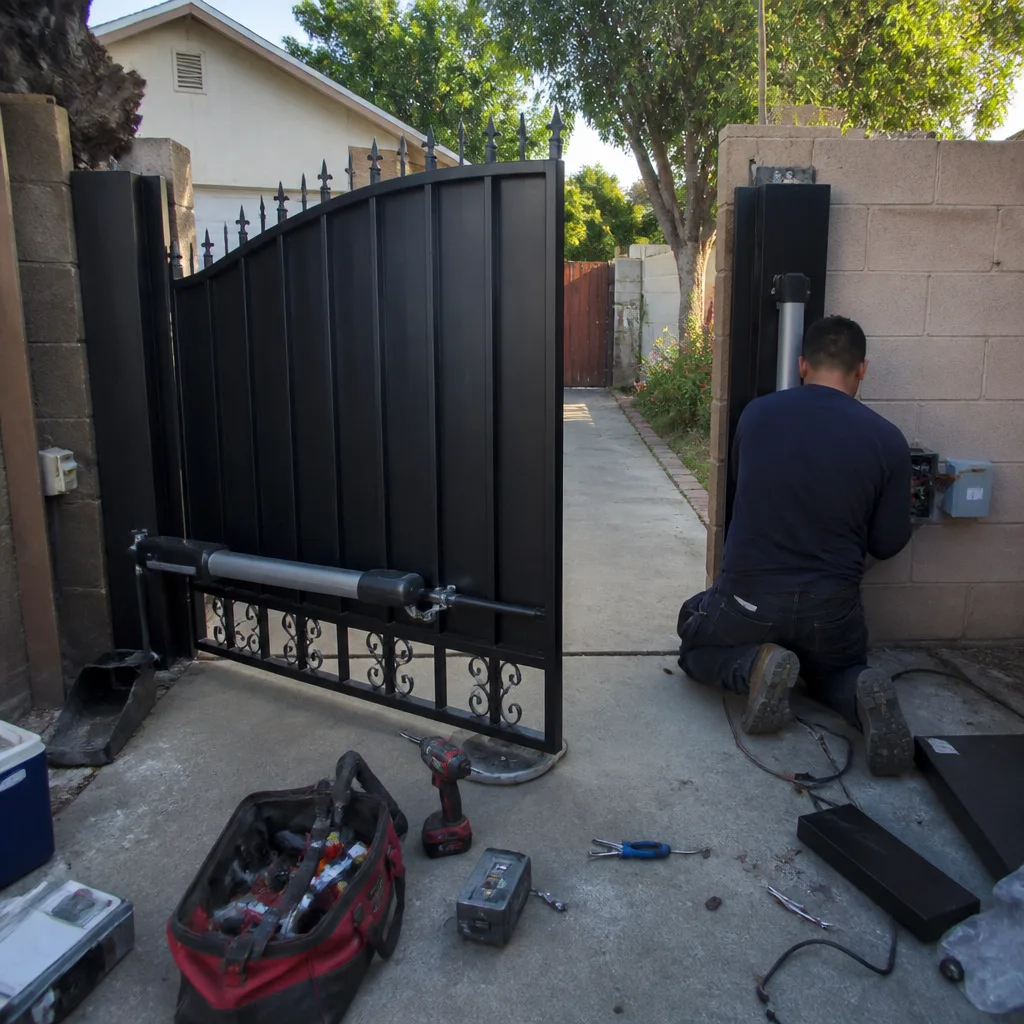 After
After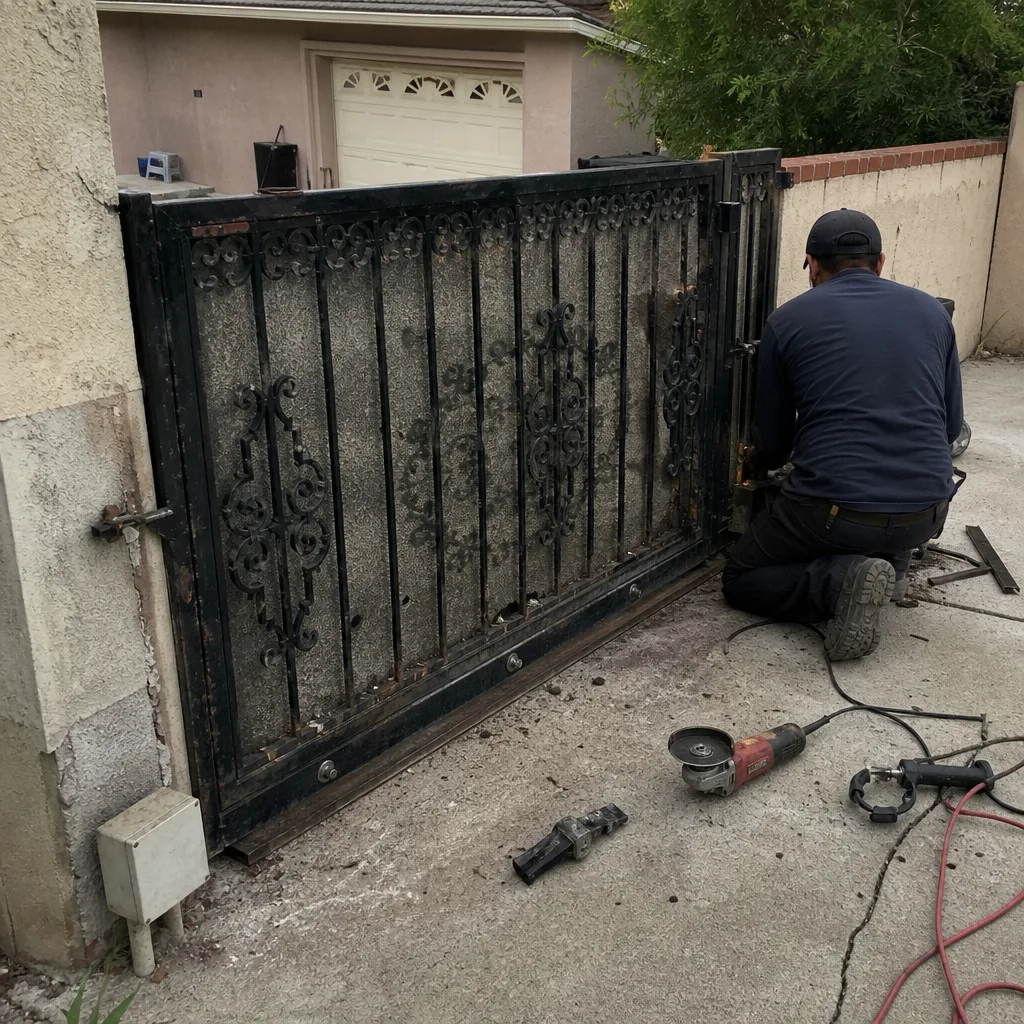 Before
 After
After Before
 After
AfterWhen to Call a Professional
If your gate motor is being installed for the first time, replacing an operator that predates current UL 325 standards, or if your gate posts are shifting in West Covina’s clay-heavy hillside soil, call a professional who understands the permit path. A contractor who does this work daily knows which projects trigger West Covina review, what the plans need to show, and how to get the final sign-off without a correction cycle. The alternative, learning the permit process on your own while the gate sits unsecured, costs more in time and mistakes than the professional quote. Carver Gate Repair West Covina offers free estimates in West Covina, call (925) 268-7956, and every quote includes the permit scope if one is required. You will know the full cost before the first tool comes off the truck.
Frequently Asked Questions
If you are replacing a failed motor with a like-for-like unit using the existing electrical run, no permit is required in most cases. If you are adding a motor where none existed or running new electrical to the operator, a permit is required through the West Covina Community Development Department. When in doubt, call the city and ask, or call our team and we’ll check for you as part of the estimate.
Electrical permit fees for a single gate operator in West Covina typically run between $150 and $400. If structural post work is included, the building permit adds another $200 to $600. The exact number depends on the scope, so confirm the current fee schedule when you apply. Our written quotes include the permit fee as a line item.
The buyer’s inspector will likely flag the gate motor during the inspection. The buyer can request a retrofit permit, a repair credit, or removal of the operator entirely. Remediation costs typically run from $1,500 to $4,500, and the seller pays for it either directly or through a price reduction at closing.
The contractor should pull the permit in their own name. If a contractor asks you to pull the permit, they are transferring the inspection liability to you while retaining control of the work quality. If the install fails inspection, the open permit stays tied to your property, not theirs.
Yes. UL 325 applies to all automatic gate operators, including residential. Enforcement is strongest on multi-family and commercial properties, but any new operator install must meet current UL 325 entrapment protection standards, and inspectors verify this on permitted installs.
For most repairs, component swaps, hinge replacements, limit switch adjustments, photo eye replacements, yes, we can often complete the repair the same day without a permit, because the work is exempt. For new motor installs or structural post work, plan for the permit timeline, typically two to three weeks in West Covina. Call (925) 268-7956 to confirm which path your repair falls into.
No. FAAC, BFT, Linear, and Viking operators all follow the same West Covina permit requirements. The brand does not change the permit trigger. What changes it is whether the project involves new electrical, new structural posts, or access control on a multi-family property. Our technicians are trained on all four brands, so the right parts and the right permit path are matched to the system you already have.
The Bottom Line
Gate repair permits in California are not about inspectors patrolling driveways. They are about what the absence of a permit costs you later: an insurance claim denial, a failed escrow, a retrofit that costs five times what the permit would have. In West Covina, the permit process is predictable and affordable, roughly $150 to $600 depending on scope, and a reputable contractor pulls it in their own name and closes it out before the job is done. Most repairs do not require a permit at all. The ones that do are almost always new motor installs, structural post work, or electrical runs. Know which category your project falls into before work starts, and if a contractor tells you permits are never needed, get a second opinion. Visit our blog for more guides & resources on gate maintenance and compliance. Carver Gate Repair West Covina puts the permit status in writing with every quote. Call (925) 268-7956 for a free estimate, and we’ll tell you exactly what your gate needs and what the city requires.
Written by Lonnie Burke, Owner at Carver Gate Repair West Covina, serving West Covina since 2008.