
Last updated October 16, 2026
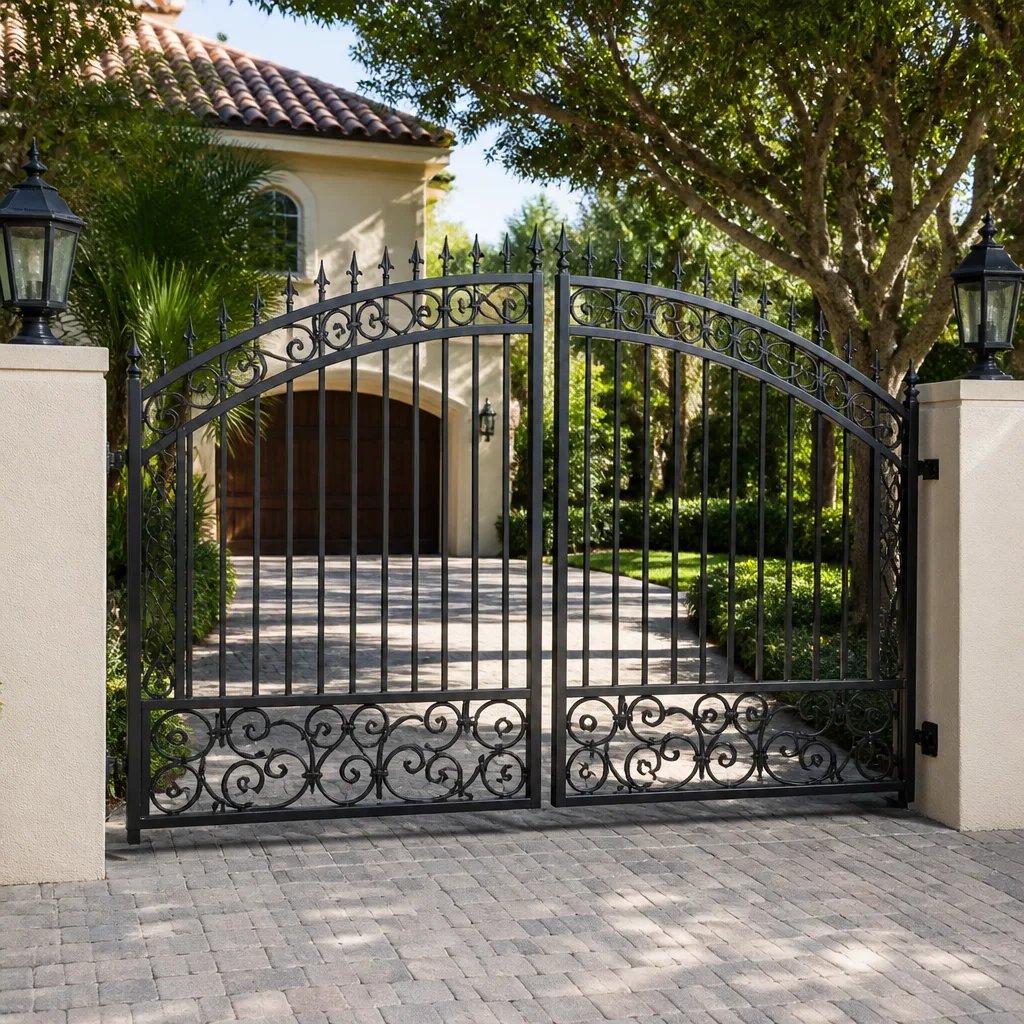 Wrought iron
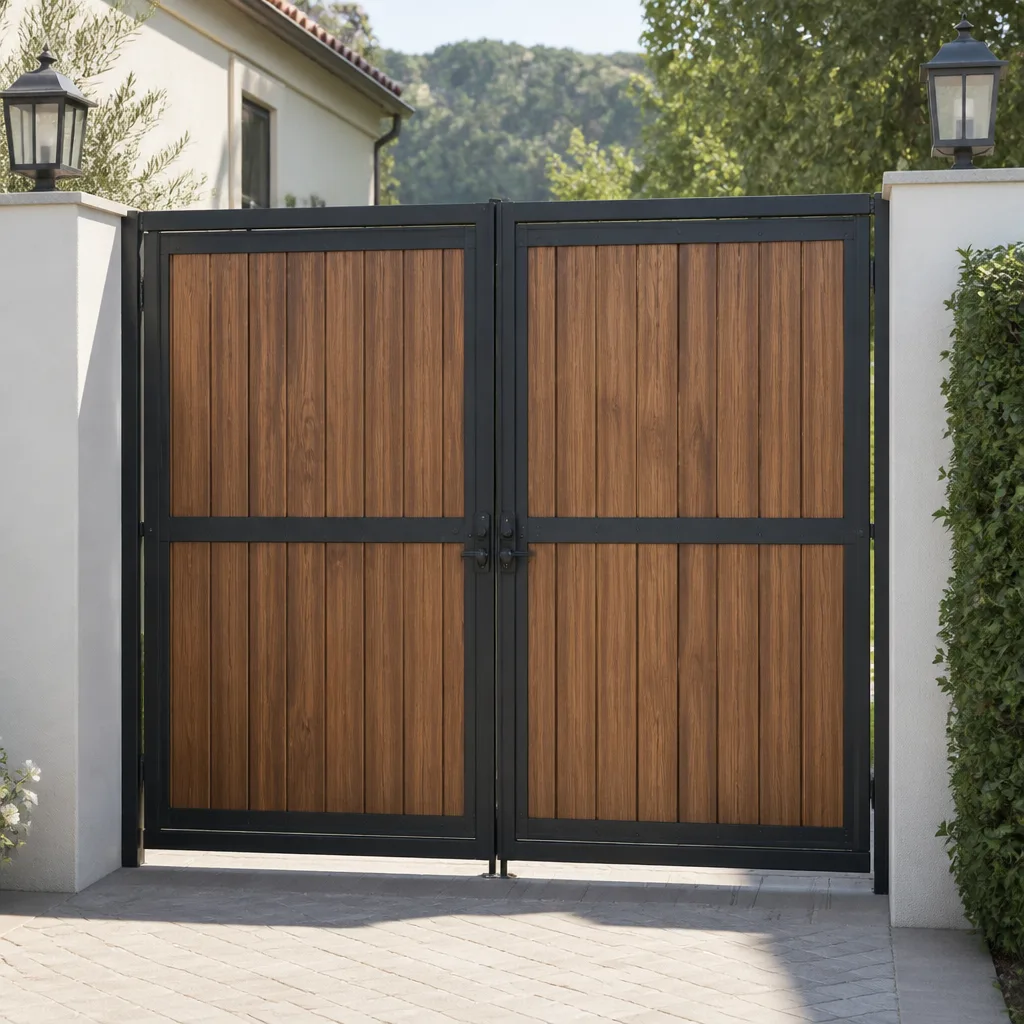 Wood & steel frame
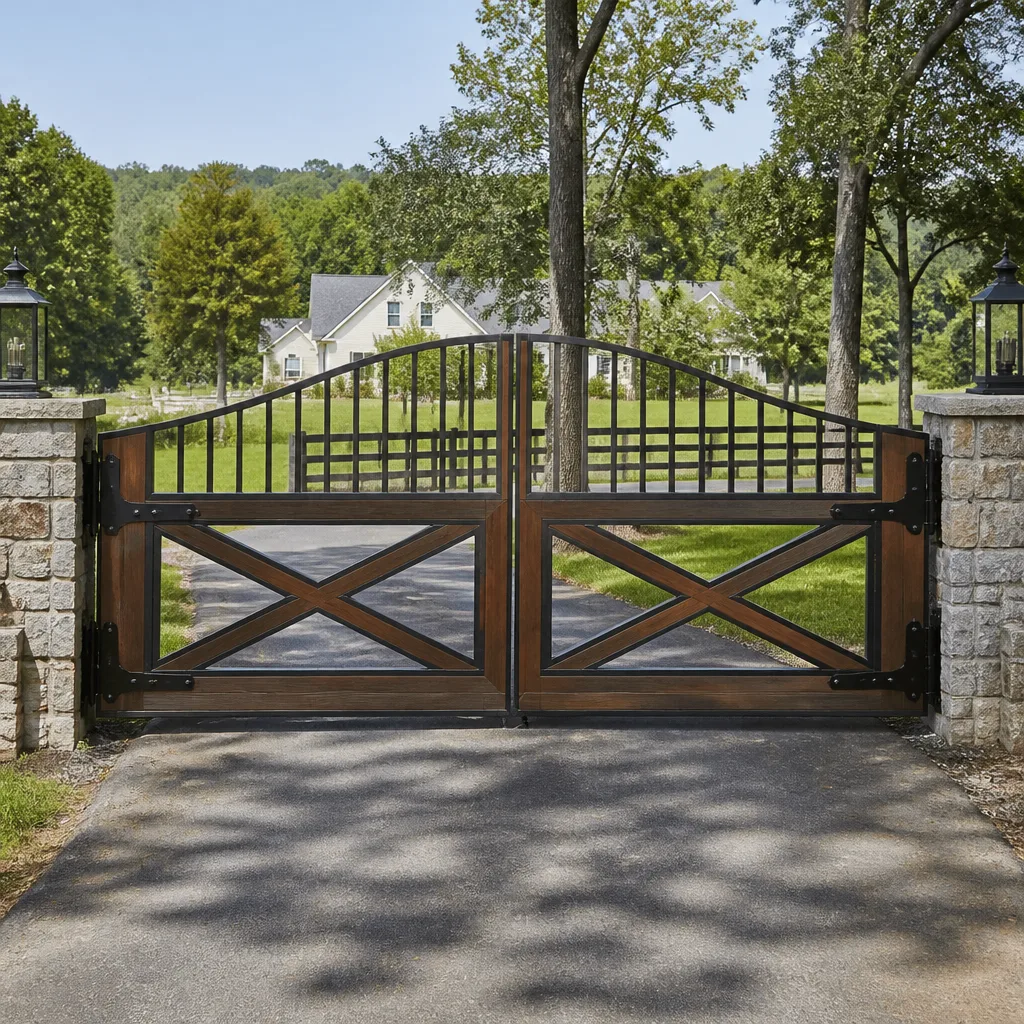 Farm & ranch
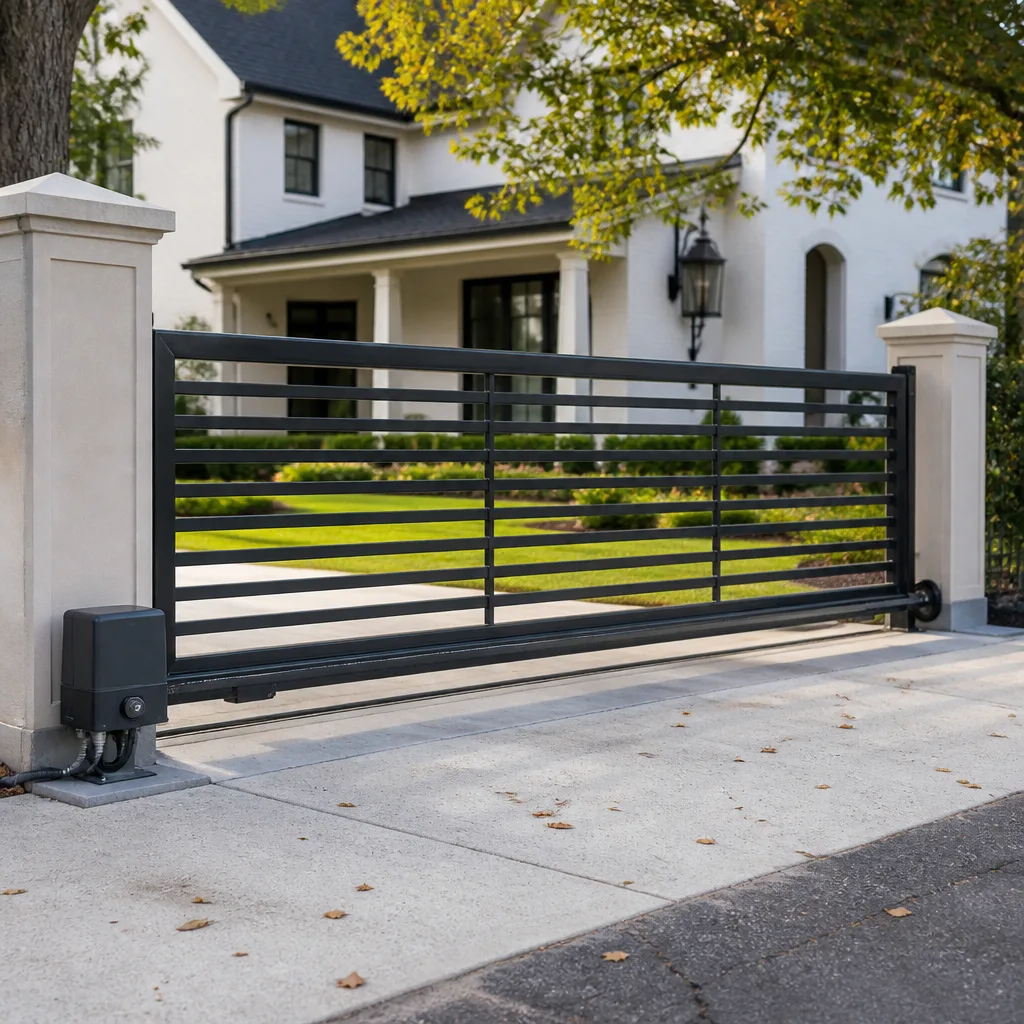 Sliding driveway gates
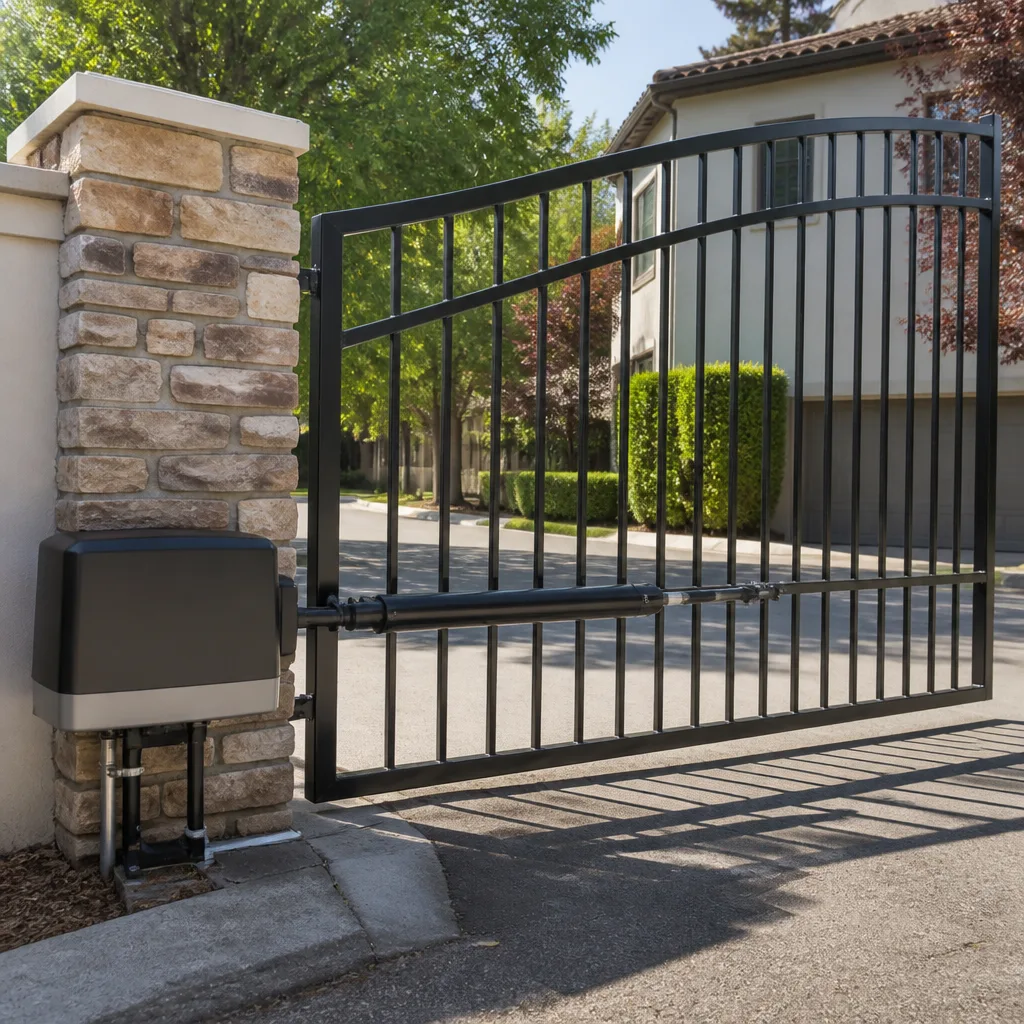 LiftMaster operators
Free on-site gate assessment - hinges, posts, and your LiftMaster or Nice gate operator checked before anything is quoted
The assessment is free and the quote is the invoice.
Get your free estimateGate Repair Warning Signs: A West Covina Homeowner’s Reference Guide
Here is a number that should make every West Covina homeowner pause: a gate that hesitates for half a second before moving is not “warming up.” That half-second pause is a motor drawing excess current to overcome mechanical resistance. Left alone, that resistance becomes a $600 repair within 90 days. This Gate Repair guide is written from the field, by technicians who have opened hundreds of gate systems across West Covina and found the same five or six failures repeating themselves, almost always weeks after a homeowner first noticed something felt slightly off. By the end, you will know what to listen for, what to measure, what each warning sign means in plain terms, and what it costs to fix at each stage, before the gate stops opening entirely.
Quick Answer
The most common gate repair warning signs in West Covina are a gate that pauses or hesitates before moving, a motor that hums without movement, a grinding or clicking sound during travel, a post that no longer sits plumb, and a control board that resets, trips, or displays a blinking warning light. If you notice any of these, the repair is almost always cheaper now than it will be after full failure, typically $125 to $380 for catch-it-early fixes versus $600 to $1,400 for failure-stage replacements. West Covina’s heat and hillside winds make these failures more common here than in coastal cities.
Styles & brands we work with
Table of Contents
- Sound-Based Diagnostics: What Grinding, Clicking, and Humming Actually Mean
- Post Lean: Measuring a Gate Post With a Level and Knowing When It’s Urgent
- Control Board Warning Lights on Nine Major Gate Motor Brands
- Usage Thresholds: How Many Cycles Per Day Accelerate Motor Wear
- Cost of Early Repair vs. Full Failure: The Five Most Common West Covina Gate Faults
- How West Covina’s Climate and Geography Affect Gate Systems
- Common Mistakes to Avoid
- When to Call a Professional
- Frequently Asked Questions
Sound-Based Diagnostics: What Grinding, Clicking, and Humming Actually Mean
Sound is the earliest and most reliable warning system a gate gives you. Most gate failures in West Covina announce themselves acoustically two to eight weeks before they become visible. The key is knowing which sound maps to which problem, because the repair path and price are completely different.
Grinding or scraping during travel. On a slide gate, grinding almost always means the drive chain or rack has lost tension and the sprocket teeth are chewing the edge of the rail. You are hearing metal on metal at the exact point where the gate’s weight transfers to the drive mechanism. On a swing gate, a grinding sound usually comes from the hinge bearings, which wear faster in West Covina because of the fine dust that lifts off the hillsides during Santa Ana wind events and settles into every moving part. Left unaddressed, a worn hinge bearing will eventually bind, and the operator arm will then bend or snap trying to move a frozen leaf. The hinge bearing itself is a $40 part. The bent articulating arm is $380 to $520 installed.
A sharp click that repeats once per second during travel. This is typically a chipped gear tooth inside the operator gearbox, or a split in the chain link that catches on each revolution. The click is the sound of the motor continuing to turn while one point of engagement slips past. You will often hear it most clearly when the gate starts moving from a dead stop, which is when mechanical load is highest. The repair, replacing the gear set, is straightforward and inexpensive relative to what happens if the chipped tooth finally jams the gearbox entirely.
A low hum with no movement at all. A hum means the motor is receiving power and trying to turn, but something is preventing rotation. On a slide gate, the usual cause is a seized idler wheel or debris packed into the track channel. On a swing gate, it is often a capacitor that has failed and can no longer give the motor its starting jolt, or a limit switch that has drifted and told the control board the gate is already open. A failed capacitor is a $30 part and a 20-minute service call. A technician who tells you the entire operator needs replacement before checking the capacitor is not doing you any favors.
One more sound worth knowing: a rhythmic thumping during travel that speeds up and slows down with the gate’s movement. That is a flat spot or a bent axle on a drive wheel. Slide gates in West Covina see this often because the track slabs settle unevenly under summer heat expansion, which loads one wheel more than the others and eventually deforms it.
Post Lean: Measuring a Gate Post With a Level and Knowing When It’s Urgent
Gate posts carry the entire weight of the leaf, plus the dynamic load of every open-and-close cycle. In West Covina, where summer temperatures routinely push above 95 degrees and the ground contracts and expands between wet winters and bone-dry autumns, post lean is one of the most common problems we see, and one of the most misdiagnosed by homeowners.
Here is how to measure it yourself with a standard four-foot level:
- Place the level vertically against the post on the side facing the gate opening, not the side facing the street.
- Position the level so it touches the post at the top and bottom. If the bubble is not centered, the post is out of plumb.
- Measure the gap at the point where the level leaves the post, in inches, with a tape measure.
- Repeat on the driveway side of the post. A post can be leaning in two directions at once.
- Record both measurements and re-check in 30 days. Movement of an eighth of an inch or more in a month means the footing or the hinge weld is actively failing.
A quarter-inch of lean over four feet is not cosmetic. It is enough to change the gate’s center of gravity, which forces the operator motor to work harder on every cycle and accelerates wear on the gearbox. Half an inch of lean means the gate is dragging at the latch point or the bottom edge is scraping the concrete. That drag is what finishes off a motor that was otherwise healthy. One inch of lean on a swing gate post is urgent. At that point, the post can rotate suddenly under load, drop the leaf, and damage the operator, the hinges, and anything in the gate’s swing path.
The repair cost depends on what caused the lean. A loose hinge mount that has wallowed out its bolt holes costs a few hundred dollars to re-drill, sleeve, and re-mount. A post that is leaning because the concrete footing was poured too shallow, which is common in older West Covina homes built before current code enforcement, requires a new footing, often $1,400 to $2,800 depending on post size and access. The earlier you measure, the more likely you catch the cheap version.
Control Board Warning Lights on Nine Major Gate Motor Brands
Every control board communicates. The problem is that each manufacturer uses its own language, and the language is often nothing more than a blinking LED. Here is what the most common warning light patterns mean in plain terms, without the technician jargon. Carver Gate Repair technicians are trained on all nine major brands, including Linear, Viking, Ghost Controls, and DoorKing, so when you describe a blinking pattern over the phone, the diagnosis is usually half done before anyone arrives. For more guides & resources, visit our blog.
Linear boards typically use a diagnostic LED labelled D1 or D2. A solid green light means the board has power and no faults. A slow blink, roughly once per second, means the board is in learn mode or has lost its stored limits. A fast blink, more than five per second, usually indicates a short in the accessory wiring, often the photo eye or the edge sensor. A red LED means a hard fault, most often a motor overload or a stuck relay.
Viking boards use numbered fault codes that display on a small screen or via count-based blinks. Two blinks means an obstruction was detected on the last close attempt. Three blinks refers to a motor overcurrent event, which is what a dragging gate or a failing capacitor triggers. Six blinks on a Viking is a communication fault between the board and a remote receiver, and it usually means moisture has entered the housing, a real concern in West Covina during the winter rain months.
Ghost Controls boards use a single multi-color LED. Green is normal. Amber flashing during operation means the obstruction sensor was tripped. Red flashing when the gate is not moving means the board detected a motor wiring fault, which can be a loose terminal, a corroded connector, or a motor that has overheated and tripped its internal thermal switch. Ghost Controls systems are popular on residential swing gates in West Covina because of their battery-backup capability, and the board fault codes are among the easiest to read once you know the colors.
DoorKing boards are almost always identified by a two-part symptom rather than a light alone. A DoorKing that resets itself, drops its remote programming, and shows an ERR message on the screen has a failing memory chip or a power supply that is no longer delivering stable voltage. The power supply on a DoorKing is a replaceable module. The mistake homeowners make is assuming the entire board needs replacement, when the fix is often swapping the power module for under $200.
If you see any LED flashing pattern that is not the normal steady state, take a phone photo or video of it before you call for service. A technician who can see the blink pattern before arriving will bring the right part on the first trip, which saves everyone time.
Usage Thresholds: How Many Cycles Per Day Accelerate Motor Wear
Gate operators are rated by the manufacturer for a specific number of cycles per day, and the numbers are lower than most people assume. A typical residential swing operator is engineered for 20 to 40 cycles per day, where one cycle is one complete open-and-close sequence. A residential slide operator is often rated slightly higher, around 40 to 60 cycles. These are not advisory numbers. They are the design limits at which the motor’s thermal protection and gear surfaces are expected to last the warranty period and beyond.
West Covina homes violate these thresholds more often than homeowners realize. A household with two working adults, one or two teenage drivers, a landscaper, a pool service, and a delivery driver passing through the gate can easily log 25 cycles before noon. Add a gate that opens for every arrival and every departure separately, rather than using a loop detector to hold the gate open during busy periods, and the motor is running double or triple its rated duty cycle.
What sustained overuse looks like in practice: the motor housing runs hot to the touch even on a cool evening. The thermal overload trips and the gate refuses to move for 15 to 20 minutes, then works again as if nothing happened. The plastic gear inside the operator begins to shed fine shavings, which collect at the bottom of the gearbox. We see gates in West Covina’s denser neighborhoods, where cars stack up at the gate during morning school runs, burn through a residential gear set in 18 to 24 months instead of the 8 to 12 years the same gear would last under rated usage.
The fix is not to stop using the gate. The fix is to match the operator to the actual duty cycle. If your household exceeds roughly 50 cycles per day regularly, a residential operator will always die young, no matter the brand. A commercial-duty operator costs more up front, around $1,800 to $3,200 installed, but it is engineered for 100-plus cycles per day and will outlast three residential units in a high-use home. For lower but still-above-rated usage, simple changes help: adding or repairing a loop detector so the gate stays open during the busiest hour, and programming the auto-close delay to hold the gate open rather than cycling it for every car in a queue.
Cost of Early Repair vs. Full Failure: The Five Most Common West Covina Gate Faults
Here is the information most guide pages skip: the actual dollar difference between catching a problem early and fixing it after the gate has stopped working. These ranges reflect what we see across West Covina’s neighborhoods, from the hillside properties north of the 10 to the flatter, denser streets south of the freeway. Every price is quoted and agreed in writing before any work starts.
- Worn hinge bearings on a swing gate. Early stage: a squeak or grind at the hinge point, gate still moves freely. Repair: $125 to $280, bearing replacement and re-grease. Failure stage: the gate binds, the operator arm bends or the motor strips its gear. Repair: $480 to $900, including new hinge, new arm, and operator service.
- Failing starting capacitor. Early stage: the gate hums for half a second before moving, or trips the breaker occasionally. Repair: $85 to $160, part and labor. Failure stage: the capacitor shorts and takes the motor windings with it. Repair: $450 to $700, motor replacement.
- Slide gate chain or rack misalignment. Early stage: a clicking or grinding sound, visible chain slack. Repair: $115 to $220, tension adjustment and sprocket check. Failure stage: the chain jumps the sprocket and the gate freewheels into the end stop, damaging the rack section and the end guide. Repair: $350 to $620.
- Post lean from a failing footing. Early stage: a quarter-inch lean, gate still operates but labors. Repair: $180 to $400, hinge re-shimming and operator limit reset, depending on access. Failure stage: the post rotates, the gate drops, the operator tears loose from its mount. Repair: $1,400 to $2,800, new footing, re-hang, and operator re-installation.
- Photo eye or edge sensor fault. Early stage: the gate reverses occasionally for no reason, or the control board shows a sensor fault but the gate still closes. Repair: $95 to $210, sensor realignment or replacement. Failure stage: the board burns out its accessory circuit trying to read a shorted sensor. Repair: $380 to $650, sensor and control board.
The pattern is consistent. The early-stage number is almost always one-third to one-half of the failure-stage number. The warning signs are observable. The only variable is whether someone pays attention to them. For a fuller discussion of what Gate Repair in West Covina covers, we have a detailed service page that walks through the repair process step by step.
How West Covina’s Climate and Geography Affect Gate Systems
West Covina is not a coastal city. The summer heat is real, with daytime highs that hold above 90 degrees from June through September. The Santa Ana winds blow down from the San Gabriel Mountains in the fall, carrying fine dust and dry air. Winter brings rain that soaks into the clay-heavy soil and causes measurable ground movement. All three of these factors work against gate hardware in specific, predictable ways.
Heat and the control board. Control boards are rated for a maximum ambient temperature, and many are installed inside metal housings that sit in direct afternoon sun. A black powder-coated operator box on a West Covina summer day can reach 140 degrees inside. Excess heat degrades capacitors first, then the electrolytic components on the board. If your operator box faces south or west with no shade structure, you are on the accelerated timeline for board failure.
Dust and the moving parts. Santa Ana wind events push fine particulate through every gap in the gate and operator housing. This dust works into hinge bearings, sprocket teeth, and chain links. It mixes with the factory grease to form an abrasive paste that grinds away at contact surfaces. The countermeasure is simple: more frequent cleaning and re-greasing of exposed bearings and chain runs, which is a service item on any good annual maintenance list. Our Seasonal Gate Repair Care for West Covina: Year-Round Homeowner’s Guide covers the full schedule.
Soil movement and the posts. The clay soil in the hillside neighborhoods north of the 10 expands when wet and contracts when dry. Over the course of a year, this cycle of expansion and contraction will shift a shallow post footing by a fraction of an inch each season, and those fractions accumulate. This is why post lean is more common on hillside properties in West Covina than on flat lots, and why a footing poured to minimum code depth in the 1970s may no longer be adequate for the gate it is holding in 2026.
Knowing the local climate is not trivia. It is the context that tells you which parts to inspect first. In West Covina, if a gate has an intermittent problem that only shows up in hot weather, suspect the capacitor or the thermal overload. If it only shows up after rain, suspect a moisture seal on the control board or a saturated sensor housing. If it only shows up during windy months, suspect dust and debris in the track or chain run.
Common Mistakes to Avoid
- Ignoring a brief hesitation at start-up. That half-second lag before the gate moves is the motor struggling against resistance. Homeowners often write it off as normal aging, but it is the single most consistent early warning of a bearing or gear problem, and ignoring it turns a $200 fix into a $700 replacement.
- Spraying lubricant without cleaning first. Hitting a dirty chain or hinge with WD-40 or a silicone spray drives the existing grit deeper into the contact surfaces. Clean first with a dry brush or solvent, then lubricate with the correct product. Lubricating over dirt accelerates wear, it does not slow it.
- Resetting a tripping circuit breaker repeatedly. A gate motor breaker that trips once is a warning. A breaker that trips twice in the same week is a diagnosis. Each trip is the overload protection doing its job. Keep resetting it and the next thing that fails will be the motor itself, at three times the price of fixing whatever caused the overload.
- Replacing the entire operator when the problem is a single component. We see this often in West Covina. A homeowner is told the whole motor is dead, when the actual fault is a $30 capacitor or a dirty limit switch. A qualified gate-specific technician diagnoses the component. A generalist replaces the unit. The cost difference is four figures.
- Ignoring a gate that is visibly out of level. A gate leaf that sags at the latch end, even by half an inch, is dragging its weight and loading the hinges unequally. Let that continue and the hinge welds crack, and a cracked hinge on a moving gate is a safety hazard for anyone standing near it.
- Treating all gate brands as interchangeable. Viking, Linear, DoorKing, and Ghost Controls all use different boards, different limit logic, and different fault codes. A technician who “works on gates” but doesn’t stock parts for your specific brand will either order a universal part that fits poorly or sell you a full replacement when a brand-specific repair would have worked. Ask the question: which brands do you carry parts for?
When to Call a Professional
Call a professional when the gate hums but does not move, when a control board LED flashes a fault pattern, when the post shows measurable lean, when the breaker trips more than once, or when the gate reverses without obstruction. See How to Hire a Gate Repair Contractor in West Covina: A Step-by-Step Guide for what to ask before scheduling. These are not homeowner-level repairs. High-tension springs, powered operators, and moving gate leaves carry real injury risk, and bypassing a safety sensor to force a gate closed is never worth the saved service call.
Carver Gate Repair West Covina offers free estimates in West Covina, with a written price delivered before any work starts. Every repair carries the Carver Gate Repair West Covina home standard: a written guarantee good for a full year, and a free second visit if the repair fails inside that window. Call (925) 268-7956 and a person answers, 24 hours a day, every day of the year.
Frequently Asked Questions
Gate repair in West Covina typically runs between $125 and $380 for early-stage problems like hinge bearings, capacitors, sensors, and chain adjustments, and $450 to $1,400 for failure-stage repairs like motor replacement, bent operator arms, or post re-footing. Full replacement installations run higher. For a complete breakdown of Gate Installation in West Covina costs and what the project includes, see our installation guide. Call (925) 268-7956 for an exact written quote, estimates are free.
A gate that hesitates before moving is drawing excess current against mechanical resistance, almost always from a failing capacitor, worn hinge bearings, or a misaligned chain. The hesitation is the most reliable early warning a gate gives. Repairing the underlying cause during this stage typically costs under $300 in West Covina.
A humming motor means the motor is receiving power and trying to turn, but something is stopping rotation, most commonly a failed starting capacitor on a swing gate or a seized wheel or packed debris on a slide gate. A capacitor replacement is typically under $160. Do not keep pressing the remote; the repeated start attempts overheat the motor windings and can burn out an otherwise healthy motor.
Yes. Emergency gate failures, a gate stuck open or stuck closed, can often be addressed the same day, and Carver Gate Repair West Covina answers calls around the clock at (925) 268-7956. When you call, a live person answers. If the repair requires a part that is not on the truck, we will tell you when it will arrive before anyone schedules the work.
A residential gate motor operated within its rated duty cycle should last 8 to 12 years in West Covina, but high-use households that cycle the gate 60-plus times per day will wear through the same motor in 18 to 36 months. If your motor is dying young, the fix is a higher-duty operator or better use of loop detectors and auto-close delays. For a guide to Gate Motor Repair in West Covina that covers specific brands and motor failure modes, see our dedicated page.
Carver Gate Repair West Covina technicians are trained and stocked for nine major gate motor brands, including LiftMaster, FAAC, BFT, Linear, Viking, Ghost Controls, DoorKing, Elite, and Mighty Mule. That means the right part arrives on the first trip, not after a week of waiting and a second service fee. Every repair includes a written guarantee good for a full year.
The Bottom Line
Gate failures do not happen on the day the gate stops. They happen quietly, in a window weeks earlier that is observable with eyes and ears and a four-foot level. A humming motor, a clicking chain, a quarter-inch of post lean, a blinking LED, a breaker that trips twice, any of these is a diagnostic clue that points to a specific repair at a known price. Reading the clue early means a $160 capacitor instead of a $650 motor, a $40 bearing instead of a $520 operator arm. Carver Gate Repair West Covina exists for exactly this: to give West Covina homeowners a written diagnosis, a written price, and a written one-year guarantee, with a live person answering the phone at (925) 268-7956 whenever you call.
Written by Lonnie Burke, Owner at Carver Gate Repair West Covina, serving West Covina since 2008.
See the difference
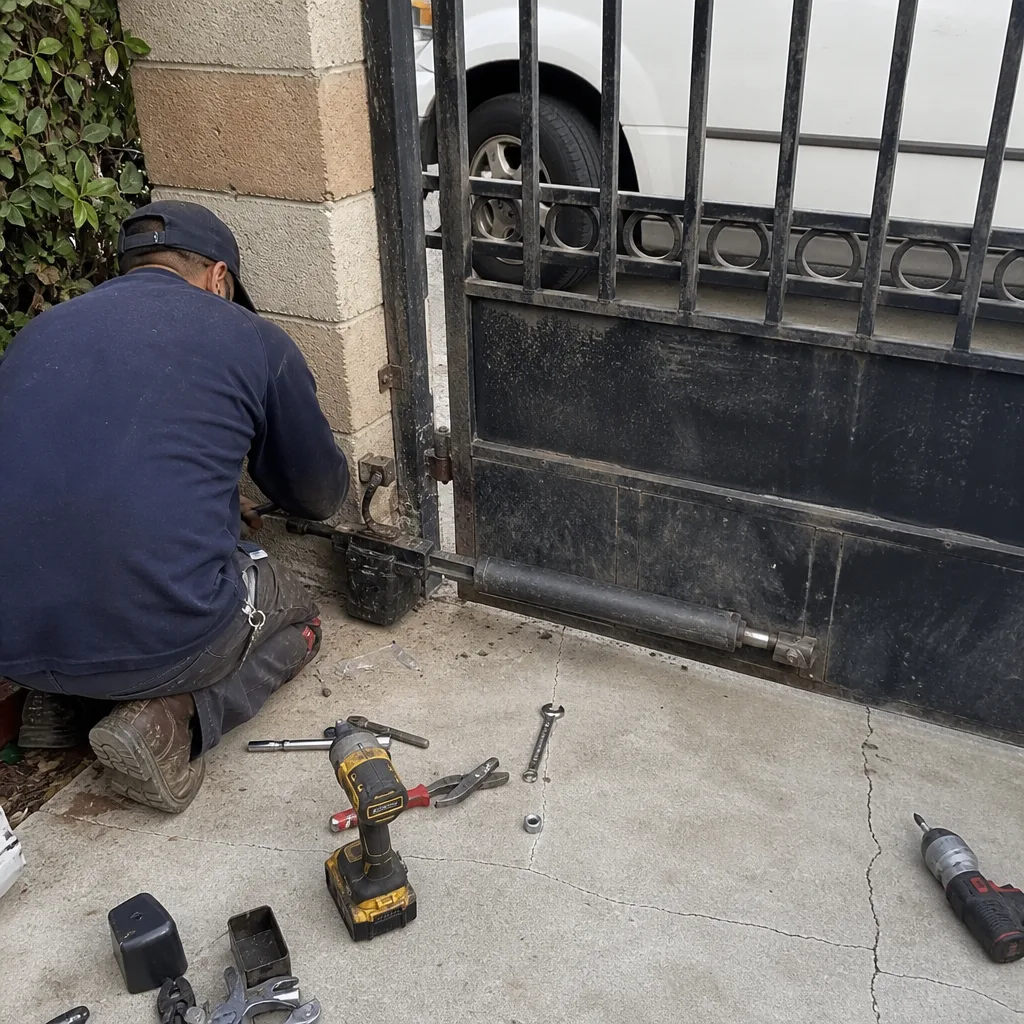 Before
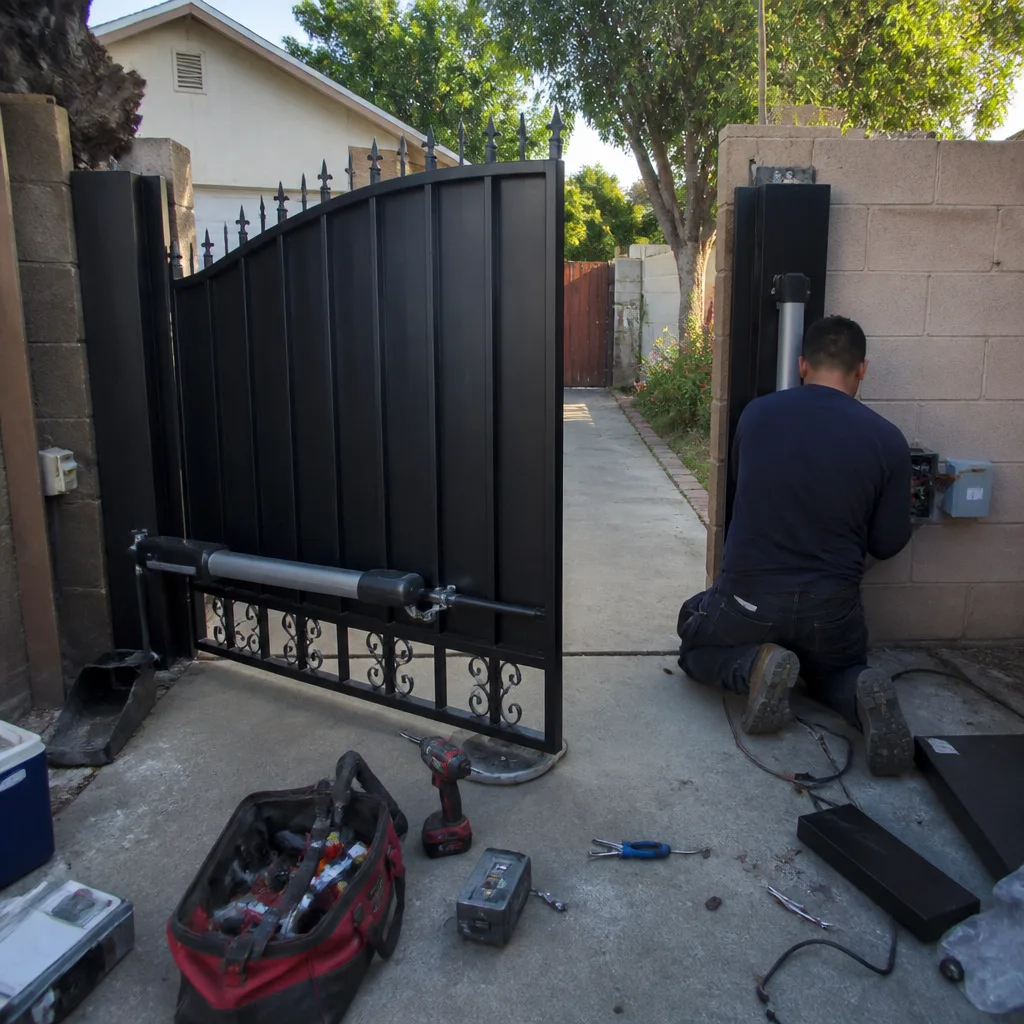 After
After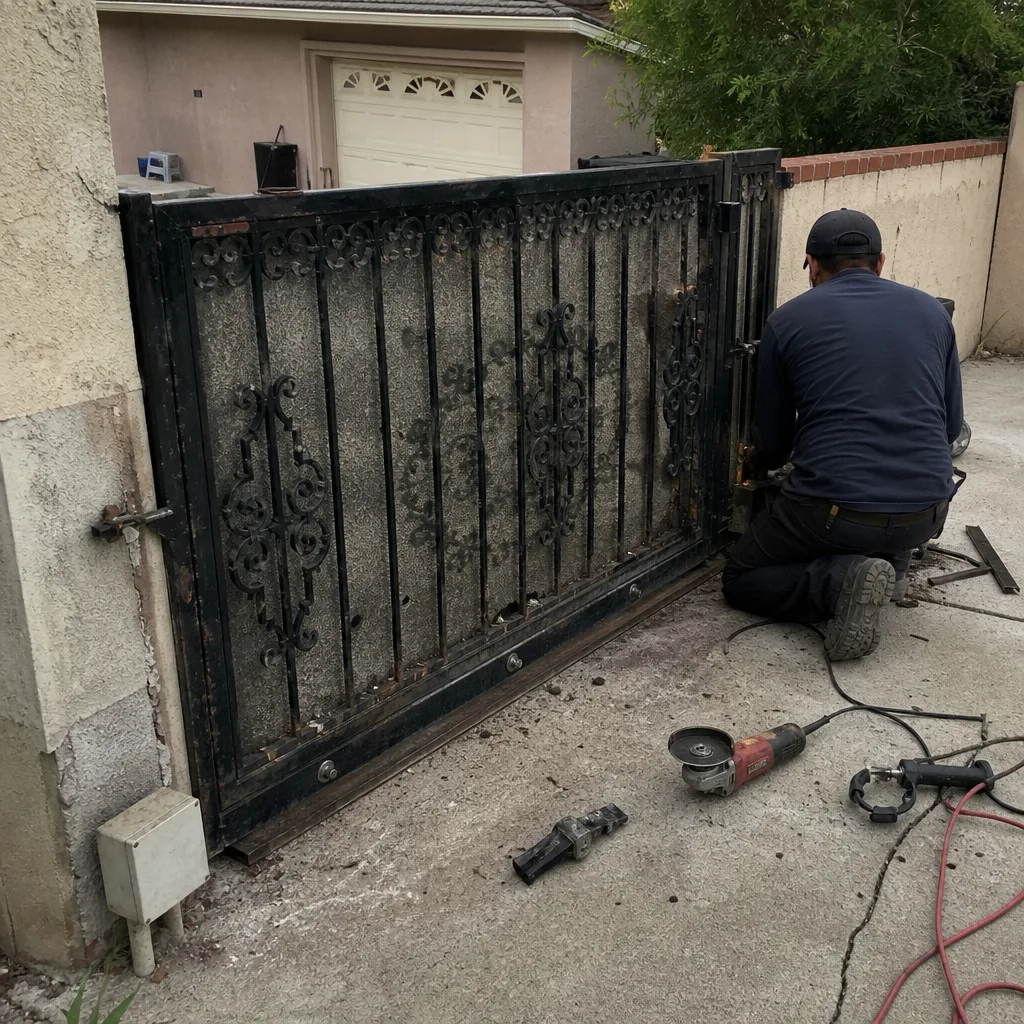 Before
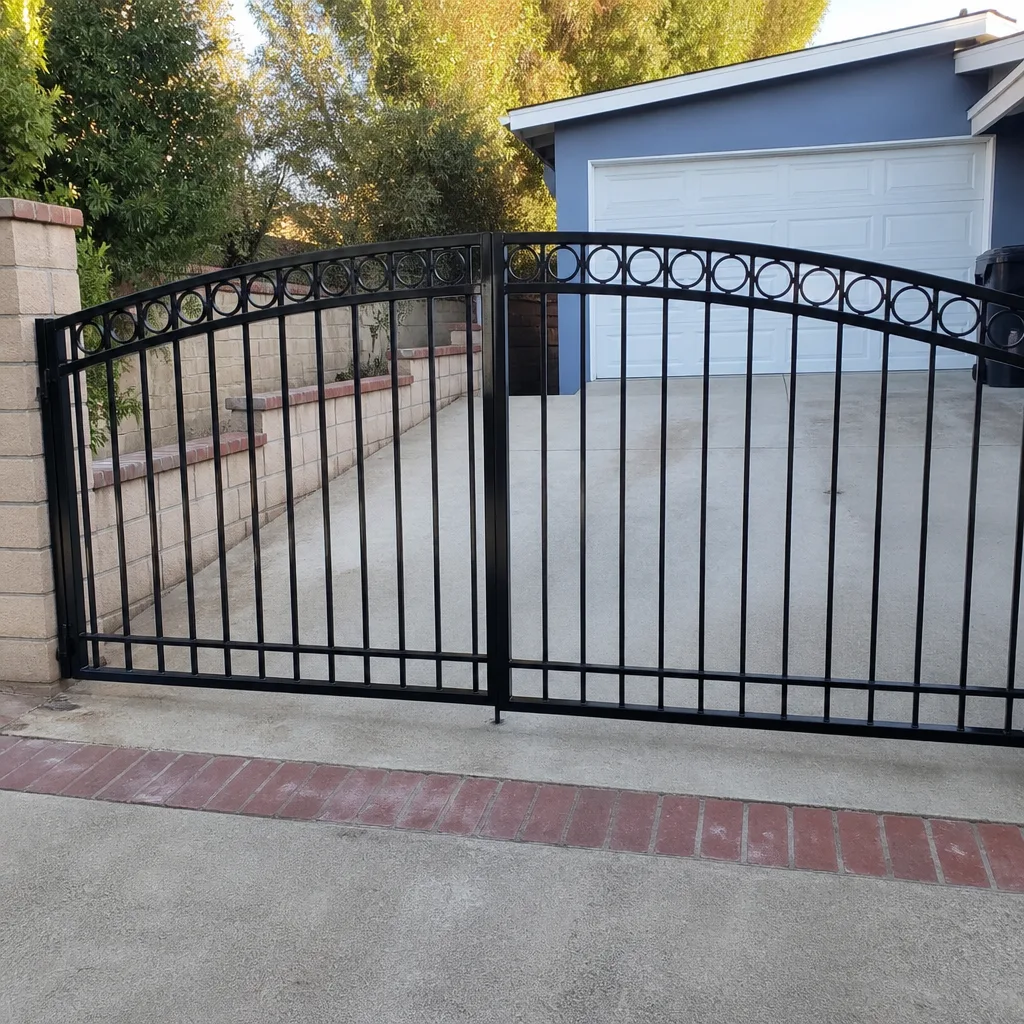 After
After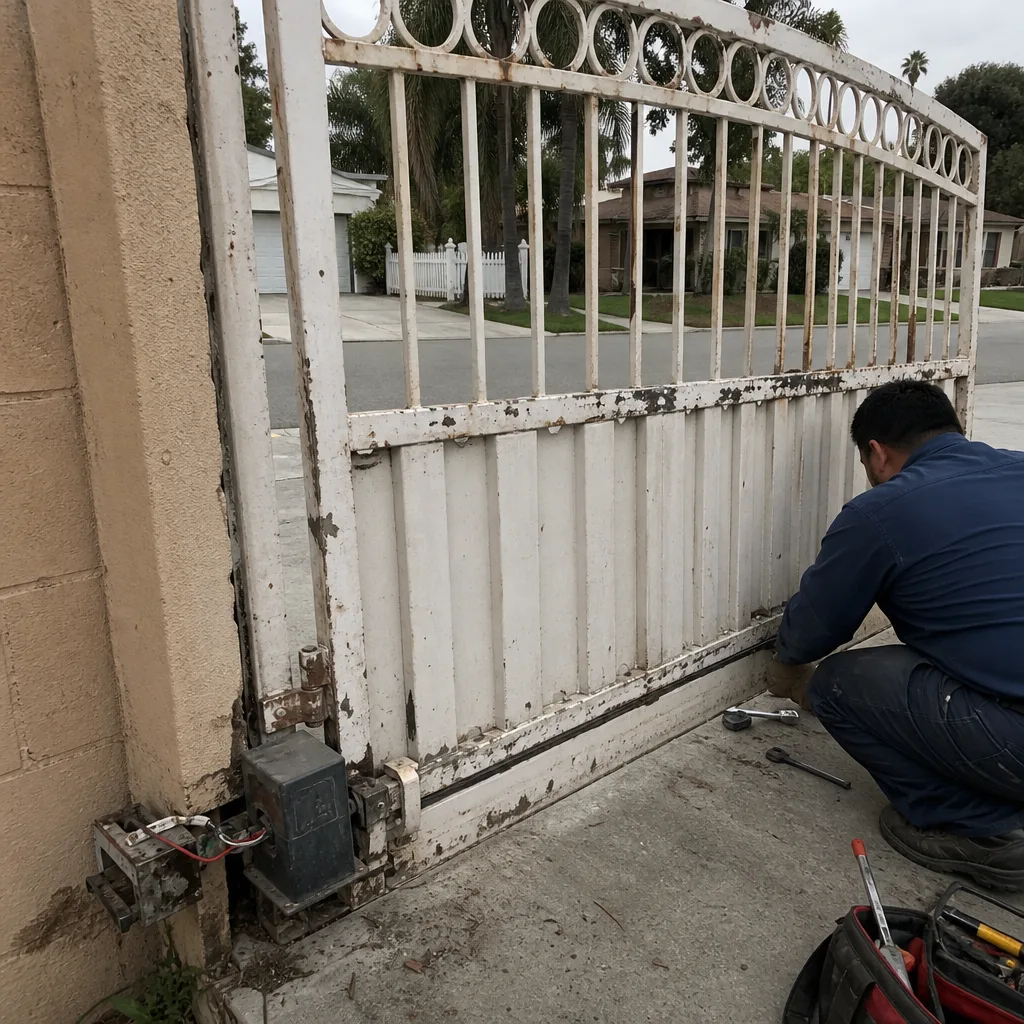 Before
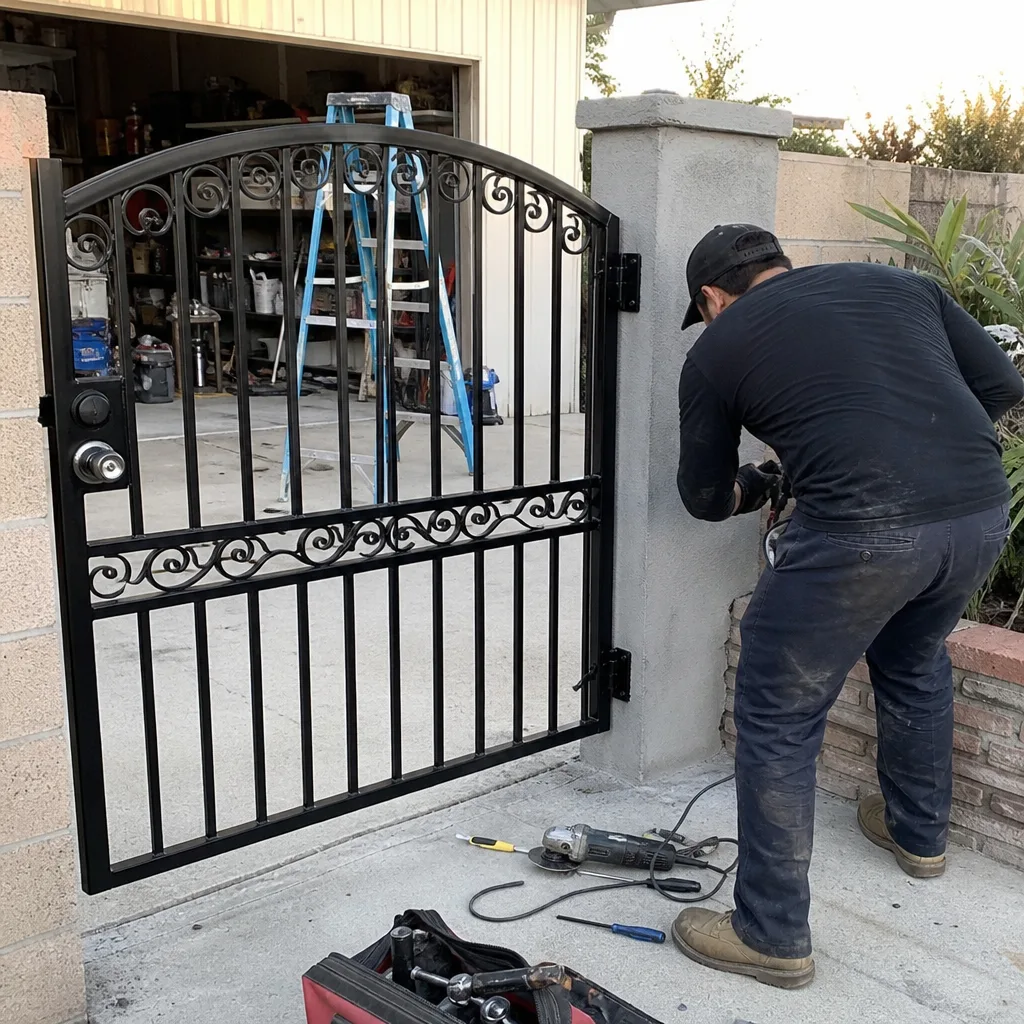 After
After