
Last updated October 16, 2026
 Wrought iron
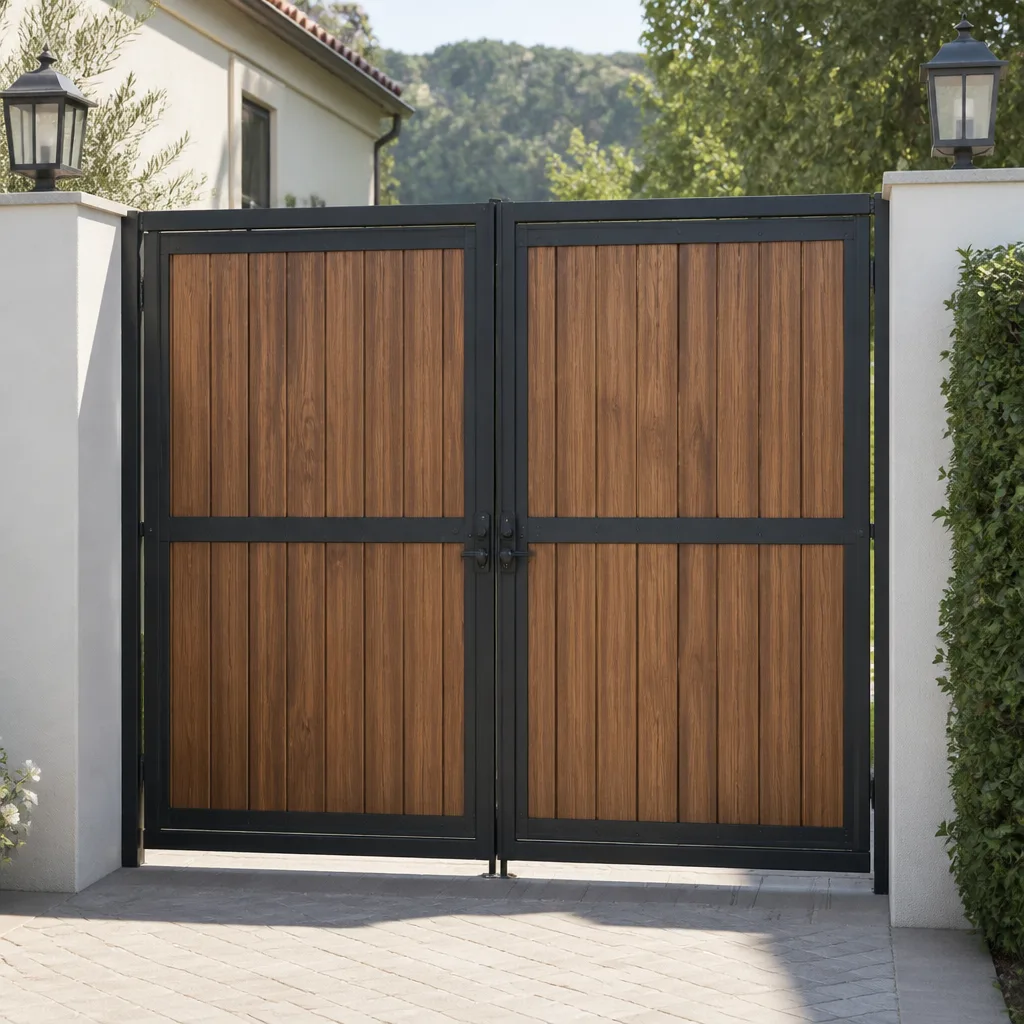 Wood & steel frame
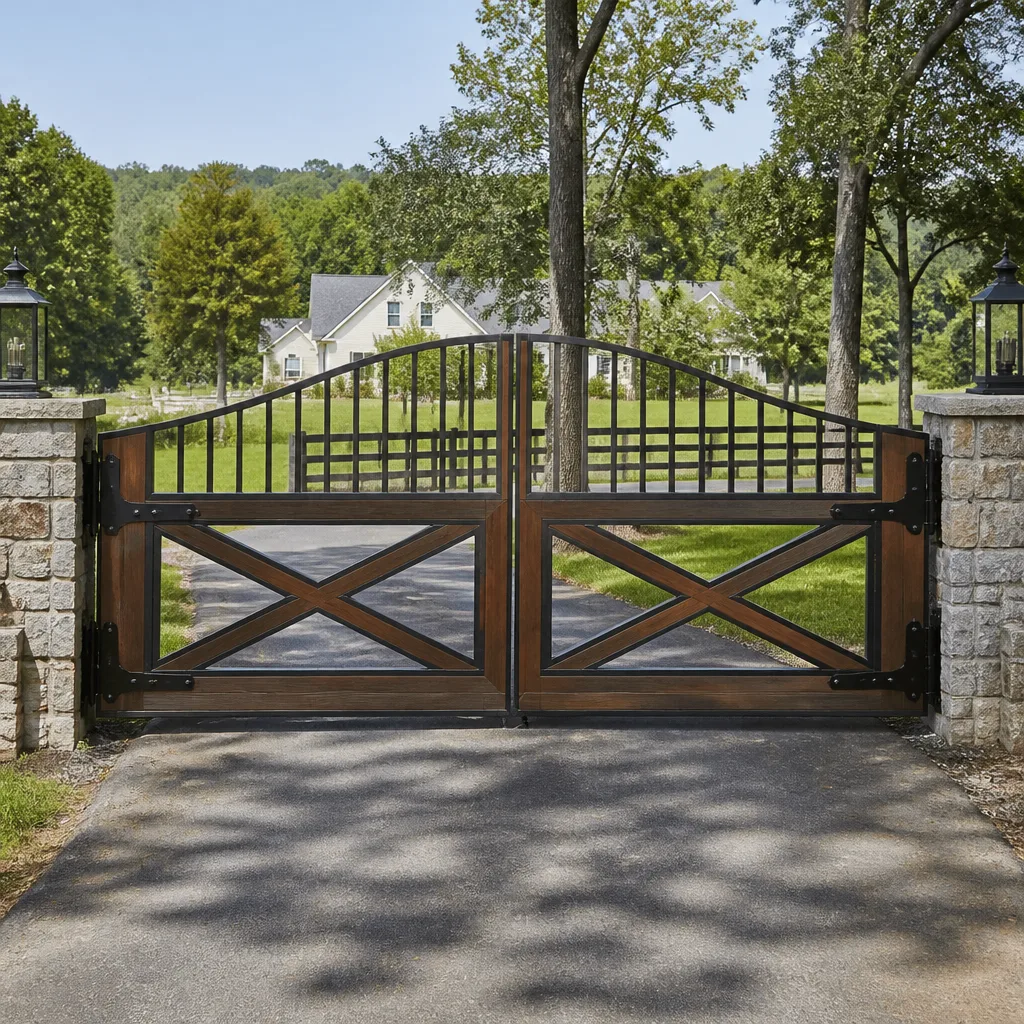 Farm & ranch
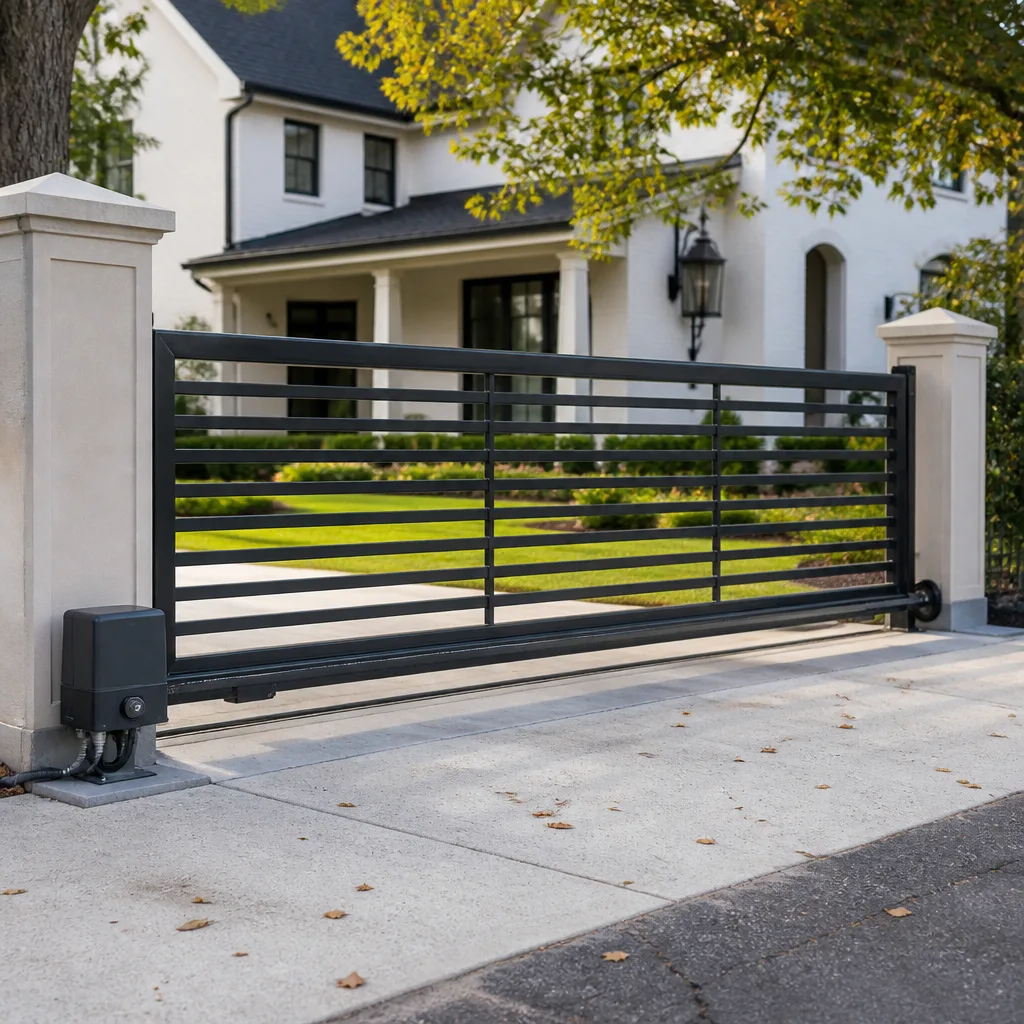 Sliding driveway gates
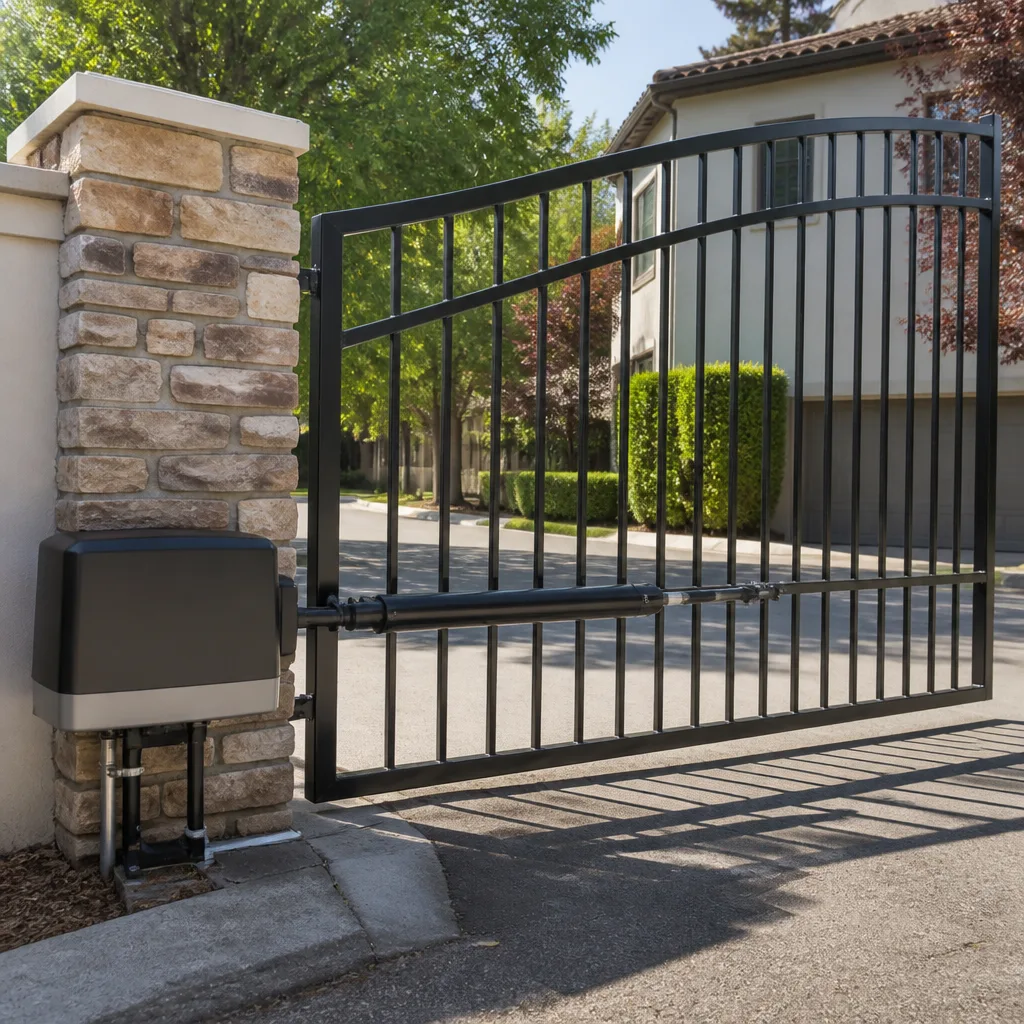 LiftMaster operators
Free on-site gate assessment - hinges, posts, and your LiftMaster or Nice gate operator checked before anything is quoted
The assessment is free and the quote is the invoice.
Get your free estimateSeasonal Gate Repair Care for West Covina: Year-Round Homeowner’s Guide
Most gate maintenance advice online is written for places with snow, ice, and deep freezes. West Covina doesn’t have those. What it does have is a climate calendar that punishes gate systems in four distinct, predictable waves, and most homeowners don’t realize the failure happening in October was set in motion back in July. The stretch from late September through November is when gate motors in West Covina fail most often. Not because of cold. Because Santa Ana wind loads stress gates that ran fine all summer, and the leaf litter, seed pods, and dust that accumulate during the dry months finally clog track systems all at once. This guide maps gate maintenance to the actual weather patterns of the San Gabriel Valley, so you’re never maintaining against a threat that doesn’t apply here. For a deeper dive, see The Complete Guide to Gate Repair in West Covina. You’ll learn what to check in each season, what tools you need, what a motor replacement actually costs in this market, and when to stop and call someone who does this work every day.
Styles & brands we work with
Quick Answer
Seasonal gate care in West Covina means checking four things on a quarterly schedule: gate stop hardware and hinge torque before Santa Ana wind season (September through November), battery backup systems and hydraulic operators before peak summer heat (June through August), control board seals and connections before fog season (December through February), and buried loop detector wire before spring irrigation and landscaping work (March through May). A monthly ten-minute visual check catches most developing problems before they become $300 to $900 repairs. If you do nothing else, inspect hinge bolts, track debris, and motor housing seals at the start of each calendar season.
Table of Contents
- Santa Ana Wind Season: September Through November
- Summer Heat: June Through August
- Winter Fog and Moisture: December Through February
- Spring Debris and Irrigation: March Through May
- The Monthly Ten-Minute Check Routine
- What Gate Motor Replacement Costs in West Covina
- Common Mistakes to Avoid
- When to Call a Professional
- Frequently Asked Questions
- The Bottom Line
Santa Ana Wind Season: September Through November
Santa Ana winds are the single biggest seasonal threat to gates in West Covina. These winds blow down through the passes, gain speed, and hit the San Gabriel Valley with gusts that regularly reach 40 to 60 miles per hour. A double swing gate that weighs 400 to 600 pounds becomes a sail in those conditions. One hard gust can bend a hinge, snap a gate stop, or strip the gears inside an operator that was already working at its limit.
In the Eastland and Sunset Ridge areas, where properties sit higher and get the full force of the wind coming down from the hills, we see the same pattern every year. A gate that opened smoothly in August starts to sag in October. The homeowner assumes the motor failed. What actually happened is the wind slammed the gate against its stop hard enough to shift the hinge alignment, and now the operator is dragging the gate rather than swinging it cleanly.
What to check in September, before the winds pick up:
- Gate stop hardware. Every swing gate should have a physical stop, either a post-mounted catch or a ground-mounted block. Grab the gate leaf when it’s fully open and try to move it past the closed position. If you can feel play or if the gate rattles against the stop, the bolts have loosened. Tighten them or replace the stop if it’s cracked.
- Hinge torque. Swing gate hinges get worked loose over months of opening and closing. With the gate in the closed position, lift up on the latch end. If there’s more than a quarter inch of vertical play, the hinge bolts need tightening. Ignoring this lets the gate drop, which misaligns the operator arm and eventually destroys the motor.
- Track and roller clearance. For sliding gates, run a gloved hand along the track after clearing visible debris. West Covina’s dry months deposit fine dust, and the track wheels can’t roll through it cleanly. Vacuum or sweep the track, then check that all rollers touch the rail evenly. A single roller that spins freely while others carry the weight is a sign the gate frame has shifted.
- Debris clearance. Leaves from eucalyptus, sycamore, and liquidambar trees in West Covina neighborhoods pile up fast in October. They don’t just sit on top of the track. They get crushed into the track channel, mix with oil residue from the chain, and form a paste that doubles the motor’s workload. Clear the full length of the track and the area around the gate’s travel path.
If you hear the operator straining during this season, or if the gate slows down noticeably on windy days, the issue is almost never the motor itself. It’s the wind load against misaligned hardware. Fix the mechanical alignment and the motor usually returns to normal operation. Our crew at Gate Repair in West Covina sees this exact pattern each fall season: the repair most homeowners don’t need is a motor replacement. What they needed was hinge and stop work done in September, before the first big Santa Ana event.
Summer Heat: June Through August
West Covina regularly sees daytime highs of 95 to 105 degrees from mid-June through early September. That’s not a convenience issue for gate equipment. It’s an operating environment that exceeds the rated temperature range printed in most gate motor manuals. When ambient air temperature hits 100 degrees, the temperature inside a black metal operator housing can reach 130 to 140 degrees. Components degrade at those temperatures. The damage is cumulative and shows up later.
Two systems fail first in West Covina heat:
Battery backup systems. Most gate motors with battery backup use sealed lead-acid or lithium batteries mounted inside the operator housing or in a separate cabinet. Lead-acid batteries have a rated operating temperature range of about 40 to 120 degrees Fahrenheit. Every degree above that accelerates internal corrosion and shortens service life. A battery that would last three years in a coastal climate might last eighteen months in direct West Covina sun. When the battery fails, the gate loses its ability to operate during a power outage. Some systems will flag an error and hold the gate open, which defeats the security purpose.
Hydraulic operators. Hydraulic gate operators rely on oil viscosity to move the gate correctly. When the oil overheats, it thins out. The result is a gate that moves sluggishly, creeps, or stops mid-cycle because the system pressure drops. Older hydraulic operators in West Covina, particularly those installed before 2010, are most susceptible. If you have a hydraulic swing gate and it behaves differently on hot afternoons than it does in the early morning, the oil temperature is the variable.
What to do before the first heat wave:
- Shade the operator housing. If your operator cabinet faces west or southwest and gets direct afternoon sun, that’s a problem. A simple shade panel, an awning, or relocating the housing a few feet can drop internal temperatures by 20 degrees. Don’t enclose the housing tightly. It needs ventilation.
- Check battery age. If your gate has battery backup and the batteries are older than 24 months, test them before summer starts. Disconnect power to the gate and see if it still opens and closes. If it won’t, or if it moves slower than normal, replace the batteries before the heat finishes them off.
- Listen for hydraulic strain. A healthy hydraulic operator makes a steady, low hum. A hot, thinning-oil system makes a higher-pitched whine. If you hear that change in June, have the fluid inspected before August. Replacing hydraulic fluid is a fraction of the cost of rebuilding an operator.
- Inspect capacitor housings on older systems. If your gate motor is a pre-2015 model, check for swollen or leaking capacitors. Heat is what kills capacitors. A bulged capacitor is a visible warning that the motor’s starting circuit is about to fail.
Heat damage is not something most homeowners notice until the gate stops working on a 100-degree afternoon. By then, the repair is urgent and the part may need to be ordered. Gate Motor Repair in West Covina covers diagnostics and replacement for motors that have cooked through a summer. But a pre-season inspection in May costs far less than a rushed motor swap in August.
Winter Fog and Moisture: December Through February
West Covina winters are mild, but they’re not dry. Morning fog rolls through the San Gabriel Valley regularly from December through February, and overnight temperatures drop into the 40s. That combination, cool air plus high humidity, creates condensation inside gate control boards and motor housings. The result is the most common winter failure we see: intermittent faults that make no sense to the homeowner.
A gate that opens fine one morning, refuses to respond the next, then works again by noon is a classic condensation fault. Moisture inside the control board housing condenses on the circuit traces when the temperature drops overnight. The moisture creates a micro-short. When the day warms up and the condensation evaporates, the fault goes away. The problem isn’t fixed. It’s just waiting for the next foggy morning.
What to check from December through February:
- Seal integrity on the control board housing. Most control boards sit in a plastic or metal enclosure with a rubber gasket. That gasket ages, cracks, and stops sealing. Run your finger along the bottom edge of the housing. If you feel moisture or see corrosion, the seal needs replacement.
- Conduit entry points. Wiring enters the operator through conduit fittings. If the fittings were installed without proper weatherproofing, or if the caulk around them has dried out, moisture wicks into the housing along the wire. This is more common in older West Covina installations from the 1990s and early 2000s, when sealing standards were looser.
- Limit switch contacts. Limit switches tell the motor when to stop. In humid air, the contacts oxidize. A lightly oxidized limit switch causes the gate to stop short or overshoot. This reads as a motor problem, but it’s a switch problem. It’s also a quick fix if caught early.
- Transformer and power supply connections. Cold, damp mornings stress electrical connections. Any wire nut connection inside the operator housing that’s loose or corroded will expand and contract with temperature swings. Tighten visible connections with the power off, or have a technician do it if you’re not comfortable working inside the housing.
Moisture damage is cumulative and quiet. A control board that gets fogged for three winters in a row may fail entirely in the fourth, and a replacement board for a quality operator typically runs $150 to $400 depending on the brand. That’s a repair that could have been prevented with a $20 gasket and twenty minutes of work in December.
For homeowners with Linear or DoorKing operators, which are common in West Covina neighborhoods, the boards are robust but not immune. The failure mode is the same: moisture intrusion at a seal or fitting. If your gate starts acting erratically only on damp mornings, that’s condensation, not a ghost. Seal it before it gets worse.
Spring Debris and Irrigation: March Through May
Spring in West Covina is when the landscaping industry wakes up. New irrigation systems get installed, old ones get repaired, trees get trimmed, and new plantings go in. That’s fine for the yard. It’s dangerous for gate systems because the most fragile component of a slide gate installation is buried in the ground: the loop detector wire.
A loop detector is a coil of wire buried just under the driveway surface near the gate. It senses the metal mass of a vehicle and tells the gate to open automatically. The wire is typically installed two to four inches below grade in a saw-cut slot that’s sealed with a flexible compound. When a landscaper digs for a new irrigation line, a tree root, or a post hole near the gate, the loop wire is the first thing in the path.
Once the loop wire is cut, the gate stops responding to vehicles. It will often still work with a remote, which confuses the homeowner. A cut loop usually requires either splicing (if the break can be located) or reinstalling the entire loop, which means a new saw cut and seal. That’s a $300 to $700 repair depending on driveway length, and it’s entirely preventable.
What to do every March through May:
- Mark the loop location. If you know where the loop is buried, mark its approximate location with paint or stakes before any spring landscaping work starts. If you don’t know, a gate technician can trace it in about twenty minutes. The marker tells any digging crew exactly where not to work.
- Walk the gate path after any landscaping visit. This is the simplest check that catches the most problems. After a landscaping crew leaves, operate the gate through a full cycle. Listen for anything different. Look for scrapes on the gate frame, disturbed soil near the tracks, and new debris on the rail.
- Check photo-eye alignment. Spring growth pushes plants into the beam path of safety photo-eyes. When a leaf or a branch blocks the beam, the gate refuses to close or reverses mid-cycle. This is the most common spring fault on slide gates, and it’s fixed in thirty seconds by trimming back the growth.
- Inspect for irrigation overspray. Sprinkler heads that overspray onto the gate operator housing are a slow-motion problem. The constant moisture and mineral deposits cause the same corrosion issues described in the winter section. Adjust the spray pattern so the operator stays dry.
Spring is also the season when homeowners in West Covina start thinking about new gates or major upgrades. If you’re considering replacing an old gate rather than repairing it, Gate Installation in West Covina is a good starting point for understanding what a new swing or slide gate involves in this area, including setback requirements and the power run to the operator.
The Monthly Ten-Minute Check Routine
Most gate failures don’t happen suddenly. They develop over weeks, with small changes that get ignored because the gate still works. A consistent monthly check catches about 80% of developing problems before they turn into a no-open Tuesday morning or a gate that won’t close on a Friday night.
Here’s the routine, in order, taking less than ten minutes:
- Run the gate through one full cycle. Open, close, and listen. A new sound is the first sign of a mechanical issue. Note any hesitation, any change in speed, any rattle that wasn’t there last month.
- Check the gap at the latch point. For swing gates, the gap between the two leaves at the latch should be consistent. For slide gates, the gap between the gate and the end post should not change. Any change means something is shifting.
- Look at the track or hinges for debris buildup. Clear leaves, seed pods, dirt, and anything else that’s accumulated. Do this before it gets compacted.
- Test the safety reversal. If your gate has a safety edge or photo-eye beam, block the beam or press the edge while the gate is closing. The gate should stop and reverse. If it doesn’t, that’s a safety issue that needs attention this week, not next month.
- Check the operator housing for water or insect activity. Ants love gate operator housings. They nest in the warmth and their bodies cause short circuits. Remove any insect activity and look for moisture inside the housing.
- Cycle the manual release. Every gate has a manual release mechanism. Operate it once a month to make sure you can open the gate by hand if the power goes out. A release that’s frozen in place is useless in an emergency.
This routine costs nothing and takes about the same time as a coffee break. The homeowners who do this consistently in West Covina call us for the same repairs other homeowners do, but they call earlier, the repairs are smaller, and the bills are lower. If you want a deeper explanation of each component and how it fails, the Carver Gate Repair West Covina home page covers the full service range and warranty terms.
What Gate Motor Replacement Costs in West Covina
Homeowners searching for seasonal maintenance often discover they need a motor replacement. Here’s what that actually costs in the West Covina market as of 2026, based on the work we’ve quoted and completed over recent seasons.
- Swing gate operator replacement: $900 to $2,200 installed. The range depends on gate weight, operator brand, and whether the existing wiring can be reused.
- Slide gate operator replacement: $1,100 to $2,600 installed. Slide motors carry more load and cost more.
- Battery backup replacement: $180 to $450 per battery set, depending on size and chemistry. Lithium costs more upfront and lasts longer.
- Control board replacement: $150 to $400 for the board, plus $150 to $250 in labor for a typical install.
- Loop detector replacement: $300 to $700, depending on driveway width and whether the existing saw cut can be reused.
- Photo-eye replacement: $80 to $180 per pair, installed.
These are the prices homeowners in West Covina should expect. Any quote significantly below these ranges on a motor replacement likely means a used or refinished operator, a skipped component, or a price that will move once the work is open. Any quote significantly above likely includes work that isn’t needed. Carver Gate Repair delivers Gate Repair services with a written price before any work starts, and that price does not move. If the repair fails inside the guarantee period, the second visit is free. Lonnie Burke, who runs the West Covina operation, built this process because this market has too many technicians who quote low at the door and settle up high at the end.
Motor repair may be possible in some cases without a full replacement, depending on what failed. If you’re not sure whether your operator can be saved, that’s a diagnostic call, which is a different cost structure. Carver covers the diagnostic process on its repair page so you know what to expect before the technician arrives.
Common Mistakes to Avoid
- Ignoring a new sound because the gate still works. That new sound is the gate telling you something changed. Fixing a worn hinge or a dirty track costs a fraction of replacing an operator that failed because it was working against resistance for six months.
- Lubricating every moving part with WD-40. WD-40 is a solvent, not a lubricant. It displaces the grease that belongs in hinges and bearing points. Use a proper gate grease or lithium grease on pivot points and keep solvents off the track.
- Waiting for fall to clear debris. In West Covina, the debris that damages gates in October built up during the dry months from June onward. Monthly clearing is easier than seasonal clearing, and it prevents the compacted paste that jams tracks.
- Assuming the motor failed when the gate behaves erratically on foggy mornings. The motor is usually fine. The control board is wet. Diagnosing the wrong component wastes money.
- Letting irrigation work proceed without marking the loop detector. Landscapers don’t know where the loop is buried. If it’s not marked, they find it with a shovel, and the repair is expensive and avoidable.
- Power-washing the operator housing. High-pressure water forces its way past seals and into control boards. Use a garden hose at low pressure or, better, a cloth.
- Replacing a gate motor without fixing the mechanical alignment first. A new motor bolted to a sagging gate will fail the same way the old one did, just slower. Alignment, hinges, and stops come first.
When to Call a Professional
Some gate work is fine for a careful homeowner with basic tools: clearing tracks, tightening visible bolts, cleaning photo-eye lenses, checking the manual release. Other work is not. If your gate’s issue involves a high-tension spring, a swing operator arm under load, or wiring inside the motor housing, stop. A swing gate under spring tension carries enough stored energy to cause serious injury if it releases unexpectedly. The same applies to slide gates with counterweights or chain drives under tension. These components need a trained technician with the right tools and experience. Carver Gate Repair West Covina offers free estimates in West Covina for exactly these situations. Call (925) 268-7956, describe what the gate is doing, and we’ll tell you over the phone whether it’s something you can handle or something one of our background-checked technicians should address.
Frequently Asked Questions
A gate in West Covina should get a thorough inspection and service twice a year, once in early fall before Santa Ana season and once in late spring after the rainy period and before summer heat. Homeowners who follow this schedule typically get eight to twelve years from a quality operator, compared to five to seven for gates that are only serviced when they fail. Between professional services, the monthly ten-minute check described above catches most developing issues.
The motor is likely in trouble if the gate moves noticeably slower than it did six months ago, if it hesitates or stutters mid-cycle, if it trips its circuit breaker repeatedly, or if the operator housing is hot to the touch after normal operation. Any one of these symptoms warrants a diagnostic look before the motor fails entirely, because a motor that fails mid-cycle can leave a gate stuck open, which defeats the security purpose.
Yes, and it’s the leading seasonal cause of gate damage in West Covina. Sustained wind against a closed swing gate pushes against the hinge hardware with force measured in hundreds of pounds. The damage shows up as sagging, misalignment, and stripped operator gears. A gate that looks misaligned after a windy week did not sag on its own. The wind did that.
Replacing a gate motor involves line-voltage wiring, load calculations, limit switch programming, and safety sensor integration. It’s not a handyman project. A motor wired incorrectly can damage the new unit, fail safety requirements, or create a shock risk. This is work for a licensed technician who installs these systems regularly. The cost of a professional install is far less than the cost of repairing damage from a DIY install that goes wrong.
Carver Gate Repair West Covina technicians work on nine major brands, including Linear, Viking, Ghost Controls, DoorKing, FAAC, BFT, LiftMaster, Elite, and Mighty Mule. If your operator is from one of these brands, we keep common parts on the truck and can usually diagnose the issue on the first visit. For less common or discontinued brands, diagnosis may take longer because parts are harder to source.
Every repair from Carver Gate Repair West Covina comes with a written guarantee good for a full year from the date of service, called the 365-Day Done Right Promise. If the same repair fails within that year, we come back and fix it at no charge. The guarantee is in writing, not verbal, and it applies to the repair work specifically, not to unrelated components that fail later.
The Bottom Line
West Covina’s climate punishes gates in four distinct ways: Santa Ana winds load hardware and strip gears, summer heat cooks batteries and thins hydraulic fluid, winter fog condenses inside control boards, and spring landscaping severs buried loop detectors. Each season has a specific set of checks that prevents its specific failure mode. The homeowners who keep a monthly ten-minute routine and schedule professional service twice a year spend less, call less, and replace less equipment. Find more guides & resources on our blog. The homeowners who wait for the gate to stop working spend the most. The choice is made twelve months in advance.
Written by Lonnie Burke, Owner at Carver Gate Repair West Covina, serving West Covina since 2008.
See the difference
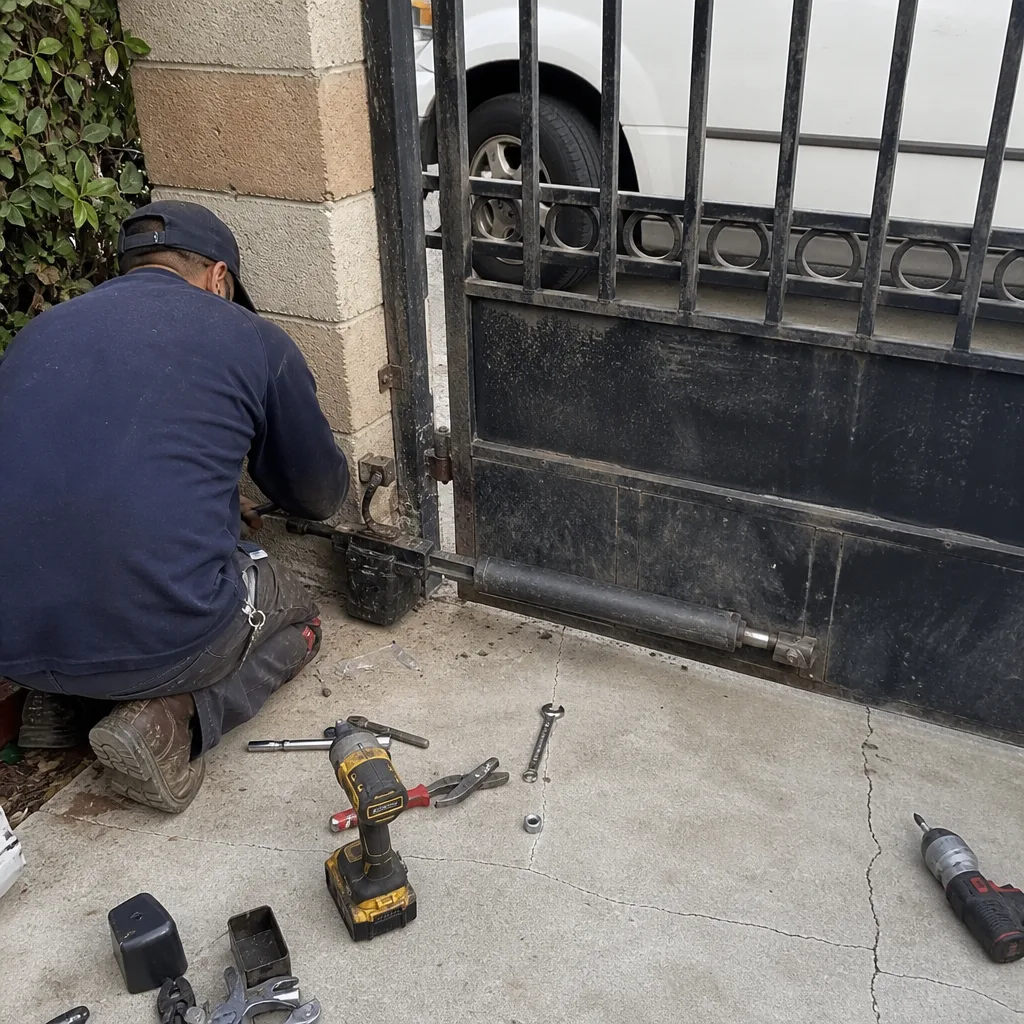 Before
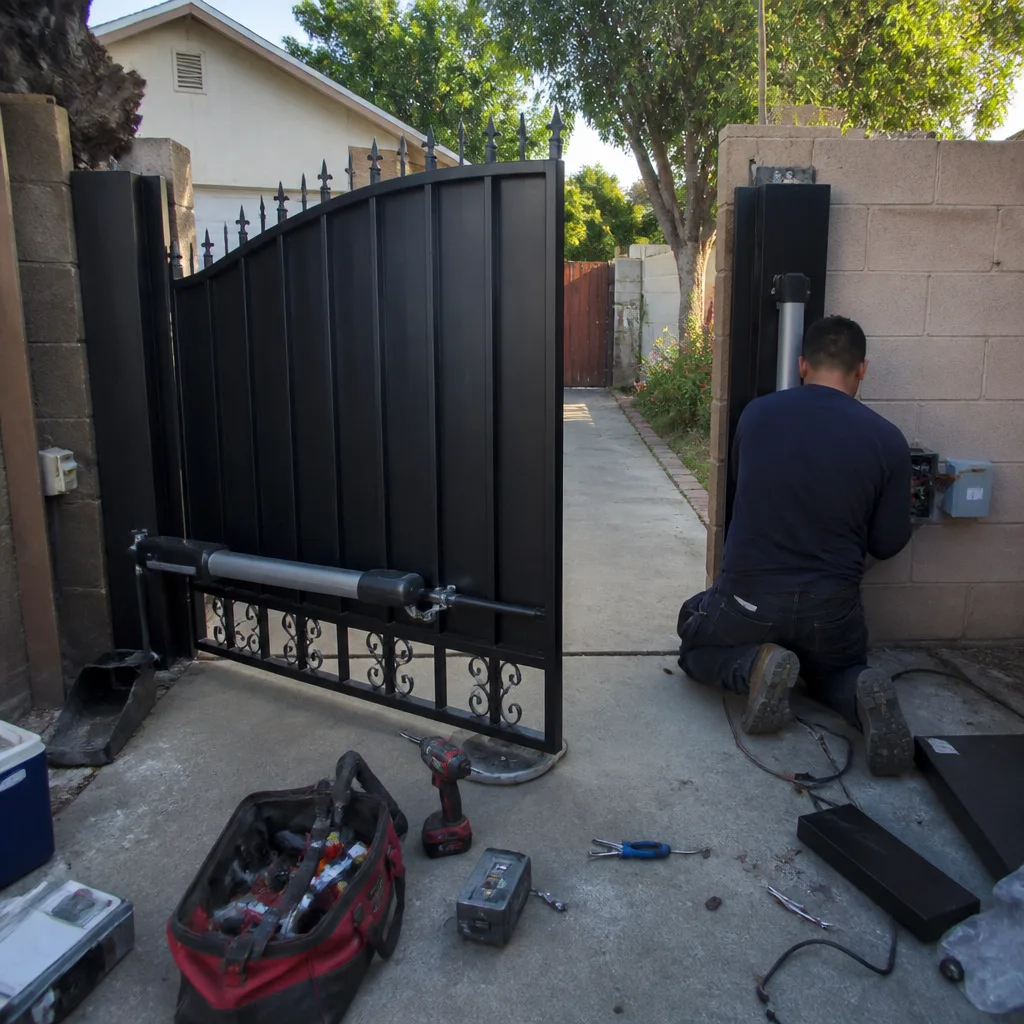 After
After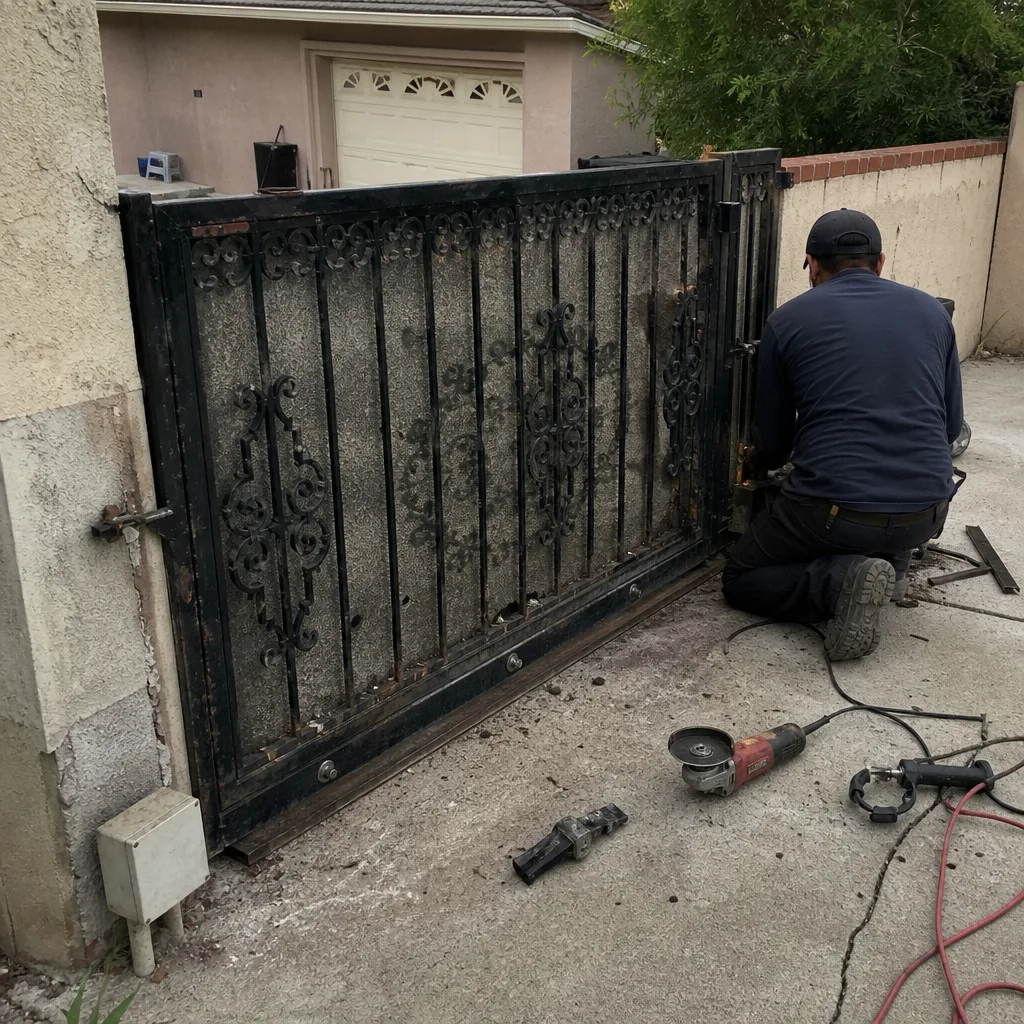 Before
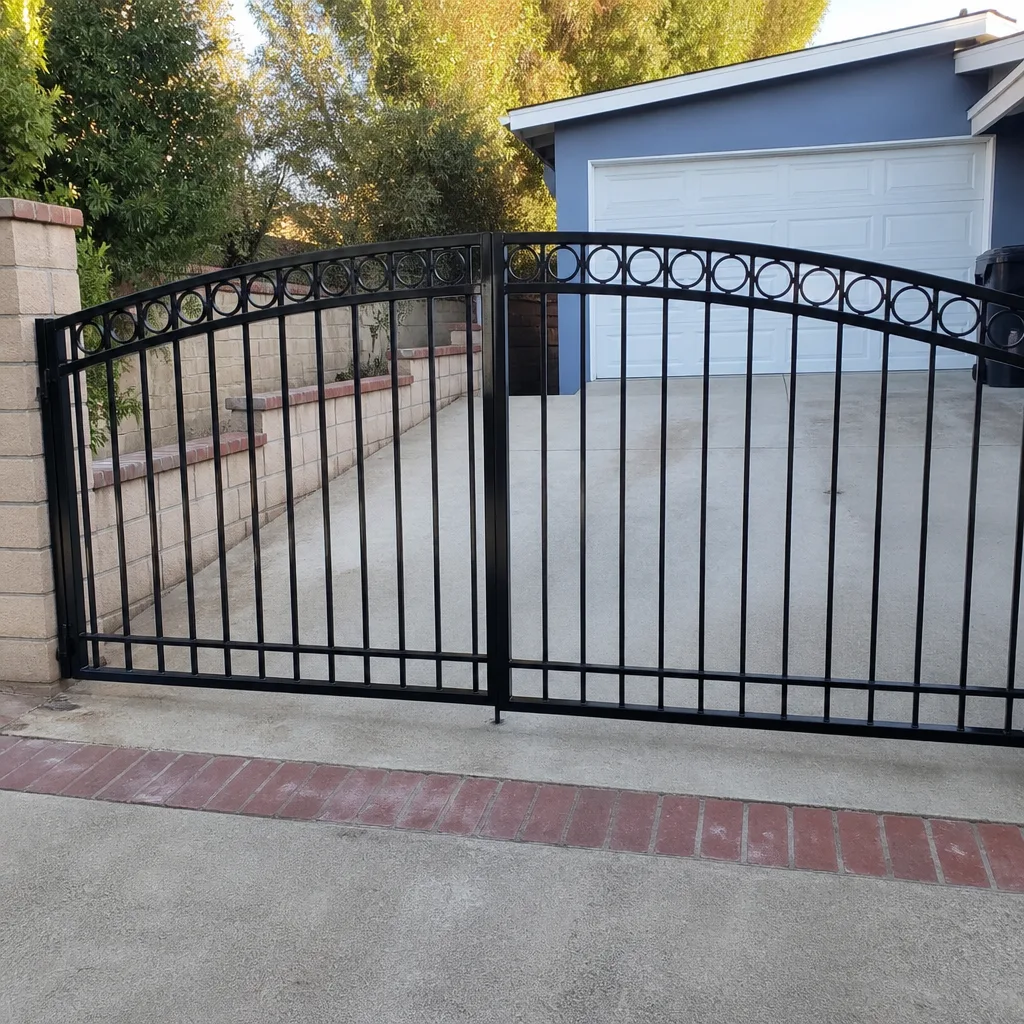 After
After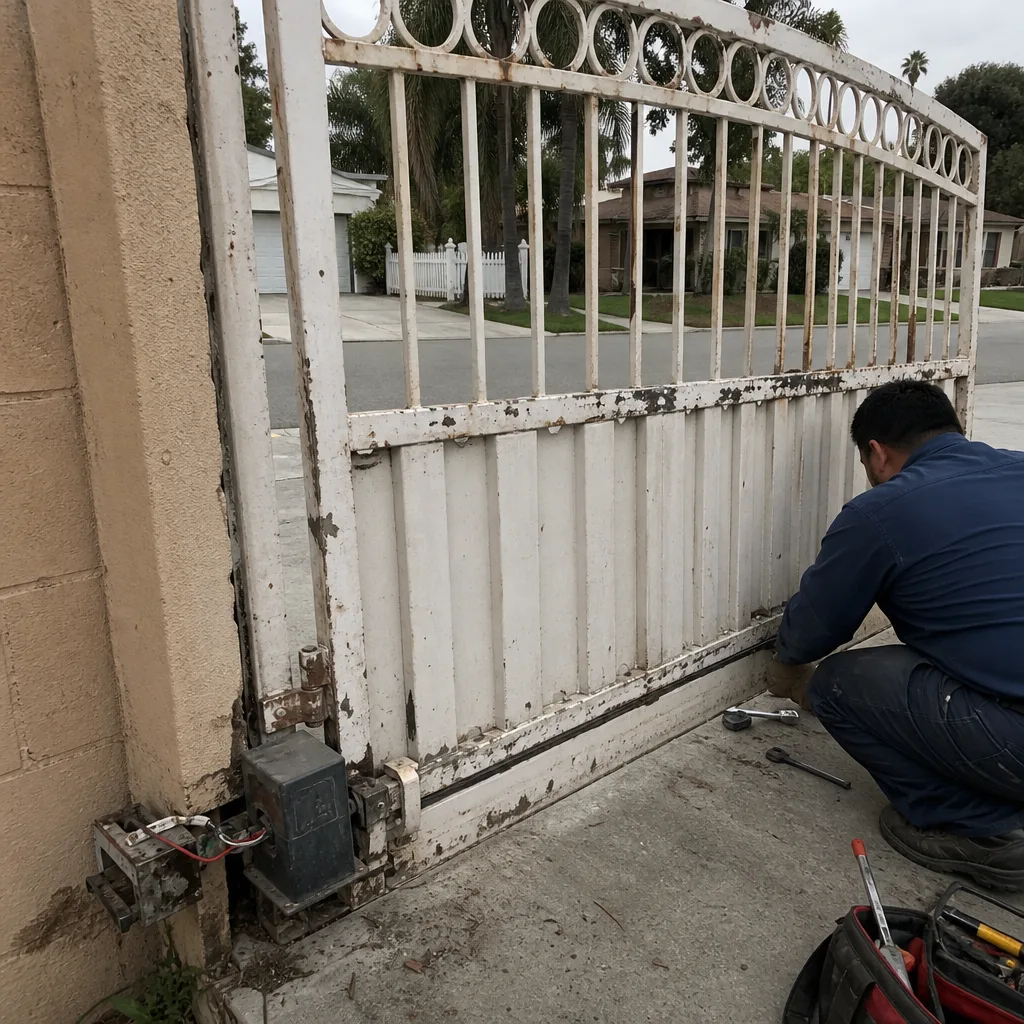 Before
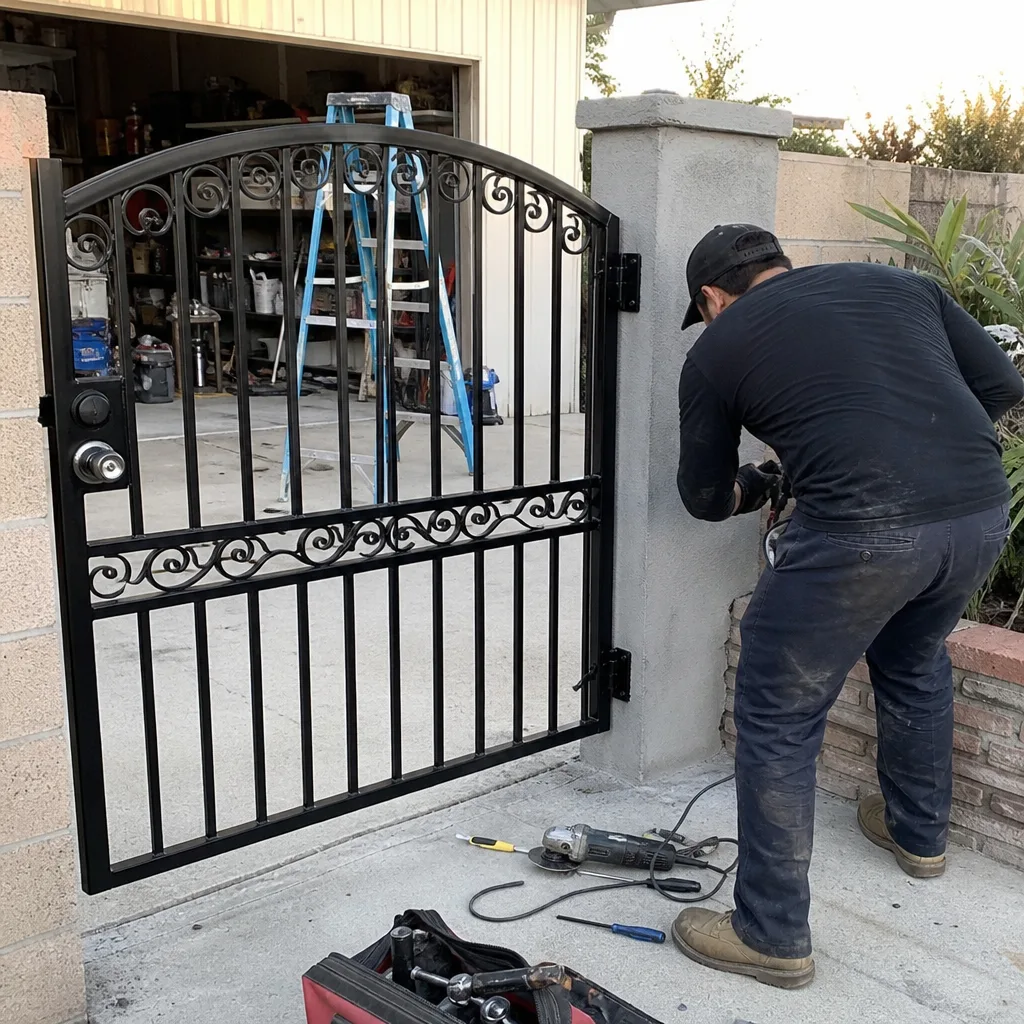 After
After